 Skip to content

You turn on the shower. Cold water comes out. You wait. Still cold. You wait some more. Cold. Eventually, finally, the temperature creeps up.
You’ve been wasting gallons of water (and minutes of your morning) every time you shower. It doesn’t have to be that way.
Why Hot Water Takes So Long
Hot water sits in your water heater tank at temperature, ready to go. The problem is that between the heater and your faucet, there’s a length of pipe full of cold water that’s been cooling since the last time you used hot.
When you turn on the hot tap, the cold water in the line has to flush out first. Until the hot water from the tank reaches your faucet, you’re getting whatever was sitting in the pipe.
How long that takes depends on two things: how far your faucet is from the heater, and how big the pipes are.
How Much Water Are You Actually Wasting?
Real numbers. A 3/4 inch copper line that’s 50 feet long holds about 1.2 gallons of cold water. If you wait 60 seconds for hot water in a standard shower (using 2.5 gallons per minute), that’s another 2.5 gallons down the drain.
Per the EPA WaterSense program, the average U.S. household wastes more than 9,000 gallons of water a year waiting for hot water to arrive. Multiply that by California water rates and you’re looking at $60-120 a year just disappearing.
The 4 Most Common Causes of Slow Hot Water
1. The Faucet Is Far From the Heater
Most common cause and the hardest to solve completely. If your master bathroom is at the opposite end of the house from the water heater, you’re flushing 30-100 feet of cold water out of the pipe every time you want hot.
Fix options range from recirculation pumps (move hot water near each fixture) to point-of-use water heaters (small heater right at the faucet that supplements the main heater). Both work. Both cost money.
2. Pipes Are Too Big
Bigger pipes hold more water. Some older homes have oversized 3/4 inch lines running to fixtures that only need 1/2 inch supply. The extra volume means more cold water to flush before hot arrives.
Not something you fix easily without a repipe, but worth knowing if you’re planning one.
3. Water Heater Is Set Too Low
Most water heaters ship from the factory at 120°F. Some homeowners turn them down to 110°F to save energy. Lower starting temperature means cooler water arrives at the tap, which feels like “still warming up.”
Per the DOE recommendation, 120°F is the right balance between scald safety and bacteria prevention. Going lower invites bacteria; going higher wastes energy and risks burns.
4. Sediment in the Tank
Years of mineral buildup at the bottom of a tank water heater reduces capacity and slows recovery. The heater has to work harder to produce the same hot water, and when capacity dips, you run out faster mid-shower.
Annual flush prevents this. If you’ve never flushed your heater, that’s almost certainly part of your problem.
Real Solutions
Hot Water Recirculation Pump (Best Bang for Buck)
A small pump installed near the heater that circulates hot water through your existing hot water lines so it’s always near every fixture. Turn on the tap and hot water arrives in seconds instead of minutes.
Cost: $400-1,200 installed depending on whether your home was pre-plumbed for it.
Smart versions only run when sensors detect movement in the house or during set time windows, keeping energy use low.
On-Demand Recirculation
Same idea but only pumps when you press a button or motion sensor activates it. Lower energy use than continuous recirculation. Slightly slower hot water response (10-20 seconds vs 5-10).
Point-of-Use Tankless
Small electric tankless unit installed right at a remote fixture. Provides instant hot water at that one fixture without affecting the main system. Good for a guest bathroom on the far end of the house.
Cost: $400-900 installed.
Insulate the Hot Water Lines
Pipe insulation doesn’t make hot water arrive faster the first time, but it keeps hot water hotter once it’s flowing. Doesn’t sound like much. Adds up over a household’s worth of taps.
The Cheap Fix Most People Don’t Try
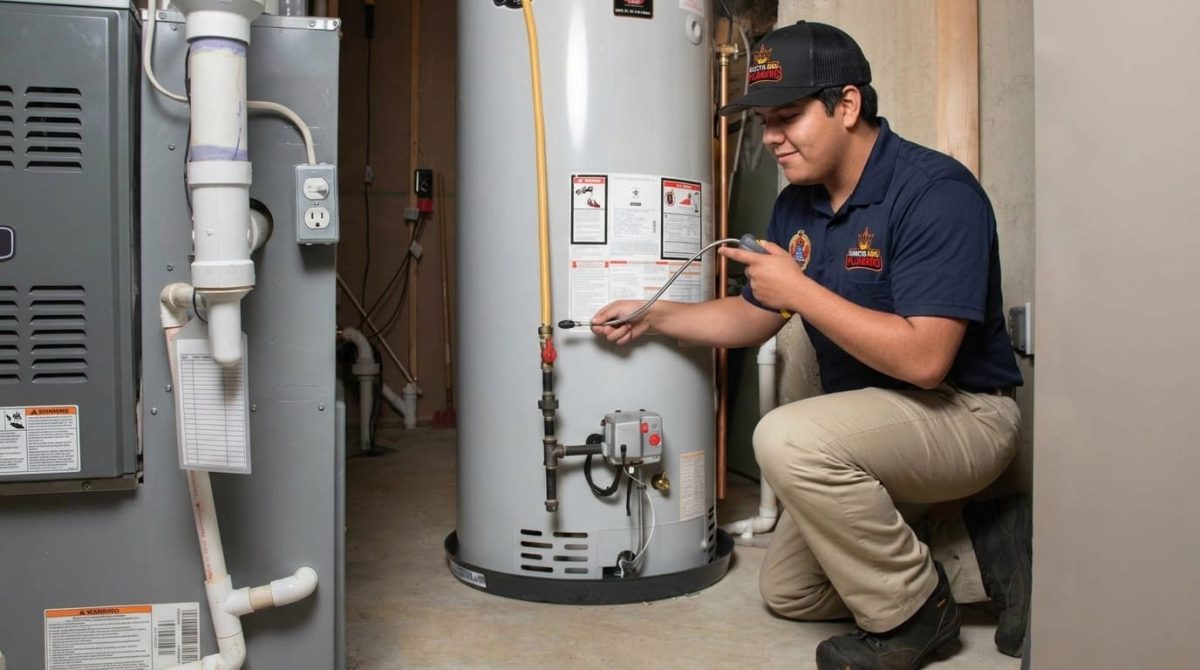
Before you spend money on equipment, flush the water heater. Drain a few gallons from the bottom drain valve until the water runs clear. If you have significant sediment, this alone often improves recovery and helps hot water arrive a little quicker.
Costs nothing. Takes 30 minutes. Annual maintenance regardless.
Bottom Line
If hot water takes more than 30-45 seconds to arrive at any tap, you have options. A recirculation pump is the most common cure and pays back the install cost in saved water within 3-5 years. If only one bathroom is the problem, a point-of-use heater there is cheaper than redoing the whole system.
Trusted Local Network
Plumbing work in older properties often surfaces broader infrastructure concerns. For related needs, we recommend regional plumbing services for older-home retrofits.
Your Riverside Water Heater Pros
Tired of waiting on hot water? Rooter King Plumbing serves Riverside, Corona, Jurupa Valley, and Orange County with recirculation pump installation, point-of-use water heater install, and full water heater service. Contact us and we’ll size the right fix for your house.