 Skip to content

TRENCHLESS * POINT REPAIR * ONE-STOP FIX
SEWER PATCH REPAIR – FIX ONE BAD SPOT WITHOUT REPLACING THE WHOLE PIPE.
When the camera shows a single crack, hole, root intrusion, or offset joint — you don’t need a full reline or excavation. Our trenchless sectional patch bonds permanently inside the pipe in just hours.- Trenchless — no digging, no broken concrete
- 50+ year service life on cured patch
- Most jobs are done same-day in 3–6 hours
- We’ll beat any written estimate
Always On Time & On Budget. Licensed · CSLB- #1090875
SAME-DAY SERVICE
FREE CAMERA INSPECTION
Show us the damage — we’ll tell you if a patch is the right fix.OR
WHAT IS SEWER PATCH REPAIR?
THE BASICS – WHAT IS IT?Also called a “point repair” or “sectional liner,” the targeted trenchless fix is for isolated pipe damage.
A sewer patch repair is a trenchless method for fixing a short section of damaged sewer pipe. A fiberglass sleeve, saturated with two-part epoxy resin, is positioned inside the pipe over the damaged area and inflated with an inflatable bladder to press it outward. As the resin cures, the patch bonds to the host pipe — creating a structural, jointless seal that’s typically 2 to 6 feet long.
The result: a localized fix for a localized problem. No digging, no replacement, no full reline. If your camera inspection shows a single crack, hole, root intrusion, or joint offset surrounded by otherwise healthy pipe, patch repair is usually the most cost-effective trenchless option.

HOW ROOTER KING INSTALLS A SECTIONAL PATCH
OUR PROCESS · STEP BY STEP01
Camera & Locate
We push a sewer camera through the line, mark the exact damage location with a sonde, and confirm a patch is the right repair (vs. lining or bursting).
02
Hydro-Clean
The pipe is jetted to remove debris, roots, and any scale so the resin patch bonds cleanly to the host pipe wall.
03
Saturate & Position
A fiberglass sleeve is saturated with epoxy resin, wrapped around an inflatable carrier bladder, and pulled to the damaged spot.
04
Inflate & Cure
The bladder inflates, pressing the patch against the pipe wall. Resin cures (60–90 min), bladder is deflated and removed, camera verifies the finished seal.
Fix Pipes Without the Mess – Call Today!
SIGNS THAT A PATCH IS THE RIGHT FIX
DIAGNOSTICS – DO YOU NEED THIS?Patch repair shines when damage is localized, and the rest of the line is sound. Here’s what we look for on the camera.
PERFECT PATCH-REPAIR SCENARIOS:
- Single crack or fracture in one section
- Root intrusion at one isolated join
- Small hole, pinhole, or corrosion spot
- Joint offset under 25% of pipe ID
- One bad section in an otherwise sound line
- Cleanout access available within 50–75 ft
- Pipe diameter between 3″ and 8″
- Need a fast, lower-cost trenchless option
GOT A WRITTEN ESTIMATE? FREE 2ND OPINION
PATCH REPAIR vs. OTHER OPTIONS
COMPARE – SIDE-BY-SIDE| FACTOR | PATCH REPAIR | FULL CIPP LINER | TRADITONAL DIG |
|---|---|---|---|
| Excavation needed | None | None | Major |
| Best for | 1 bad spot | Multi-spot damage | Total failure |
| Time on site | 3–6 hours | 1 day | 2–10 days |
| Service life | 50+ years | 50+ years | 50+ years |
| Property disruption | Minimal | Minimal | Heavy |
Deciding whether a sewer patch fits the problem
A sectional patch is a focused repair proposal. Before authorizing it, ask which defect was found, where it is and why a local repair is being recommended rather than work on a longer section. The aim is a clear explanation of the inspected problem and the boundaries of the quoted repair.
Read the sectional-repair planning checklist
Identify the problem being repaired
Ask to see or discuss the inspection finding that supports the patch recommendation. Establish whether the concern is a particular joint, a localized defect or another identified section. A description such as “bad sewer” is not a useful boundary for a focused repair. Ask what part of the line was inspected and whether any part could not be assessed. The recommendation should distinguish the defect from a temporary obstruction that may need a different response.
Understand the proposed patch location
The estimate should describe the intended repair area clearly enough to relate it to the inspection. Ask how the location will be identified and which access point is proposed. Confirm whether there are nearby connections or other features that affect the plan. If the location cannot be confirmed during the first assessment, ask what further work is needed and whether that is included. Avoid treating an approximate description as a final installation specification.
Ask about the rest of the inspected line
A focused repair should be considered in the context of the surrounding pipe. Ask whether the assessment found other concerns and whether those fall outside the patch proposal. A patch at one location does not mean every other section has been replaced. If several defects were identified, ask why separate local repairs or a longer rehabilitation were considered. Keep those distinctions in the written scope so that you understand what the quoted work is intended to resolve.
Separate clearing from structural repair
If the line is blocked, ask whether clearing is needed before its condition can be assessed properly. Confirm whether cleaning or preparation is part of the patch estimate or a separate stage. Being able to restore flow and deciding how to address a defect are different tasks. Ask what the initial visit will establish and at which point you will be asked to approve a repair. If preparation reveals a different condition, request an explanation before the scope changes.
Compare disruption and restoration
Ask what equipment access is needed and whether any opening or excavation is proposed for your property. A service described as trenchless should still have its access arrangements explained. Check whether removal and reinstatement of paving, landscaping or finishes are included where relevant. If another method is proposed for comparison, compare the entire scope and restoration work rather than assuming the smallest visible work area always gives the best result.
Plan use of the connected fixtures
Discuss any restrictions on fixture use during the work and how the team will communicate when normal use can resume. Tell the office if the line serves tenants, a business or several parts of a property. Confirm who needs notice and who can make decisions if the inspected conditions change. Scheduling expectations should come from the job discussion, not from a general estimate of how long a similar repair took elsewhere.
Know what the completion record covers
Ask what checks will be made after installation and what documentation will be available. If camera footage is included, ask the team to explain the repaired area and any remaining observations outside it. Confirm that the record identifies the work completed rather than implying the entire sewer has been renewed. Keep the agreed scope alongside the completion information so the limits of the repair remain clear for later maintenance or a future property decision.
Consider when a different scope may be better
If the assessment does not support a localized repair, ask which findings lead to that conclusion. A different proposal may concern a longer liner, replacement or further investigation. Request a comparison of the problem addressed, access needs and restoration activities. The existing CIPP lining and trenchless-service guides can help you prepare questions, but the site findings should determine the recommendation.
Confirm the scope before authorizing work
Ask which assessment, labour, materials and equipment the written estimate includes. Identify access openings, finish restoration, disposal and cleanup separately when they are not part of the same scope. An advertised starting price or special offer does not establish the total for every property. Confirm eligibility and any restrictions before booking. If the diagnosis changes, request an explanation of the proposed additional work and its price before approving it.
Keep a useful record of the visit
Before the visit ends, ask what was found, what was changed and how the result was checked. Confirm whether photographs, video or test results are included for your particular job rather than assuming every service provides the same records. Keep the estimate, invoice and any supplied documentation together. Ask what symptoms would justify another call and which maintenance tasks, if any, are recommended. Request applicable warranty terms in writing, including exclusions and any conditions you need to follow.
Arrange the appointment and access
Describe the problem, your location and who can authorize work. Mention tenants, locked gates, restricted parking and relevant access concerns. An online request is a request for contact; confirm the appointment and current availability with the team. For an urgent problem, use the phone number on the page instead of assuming a form has triggered dispatch. Keep people and pets away from an affected work area.
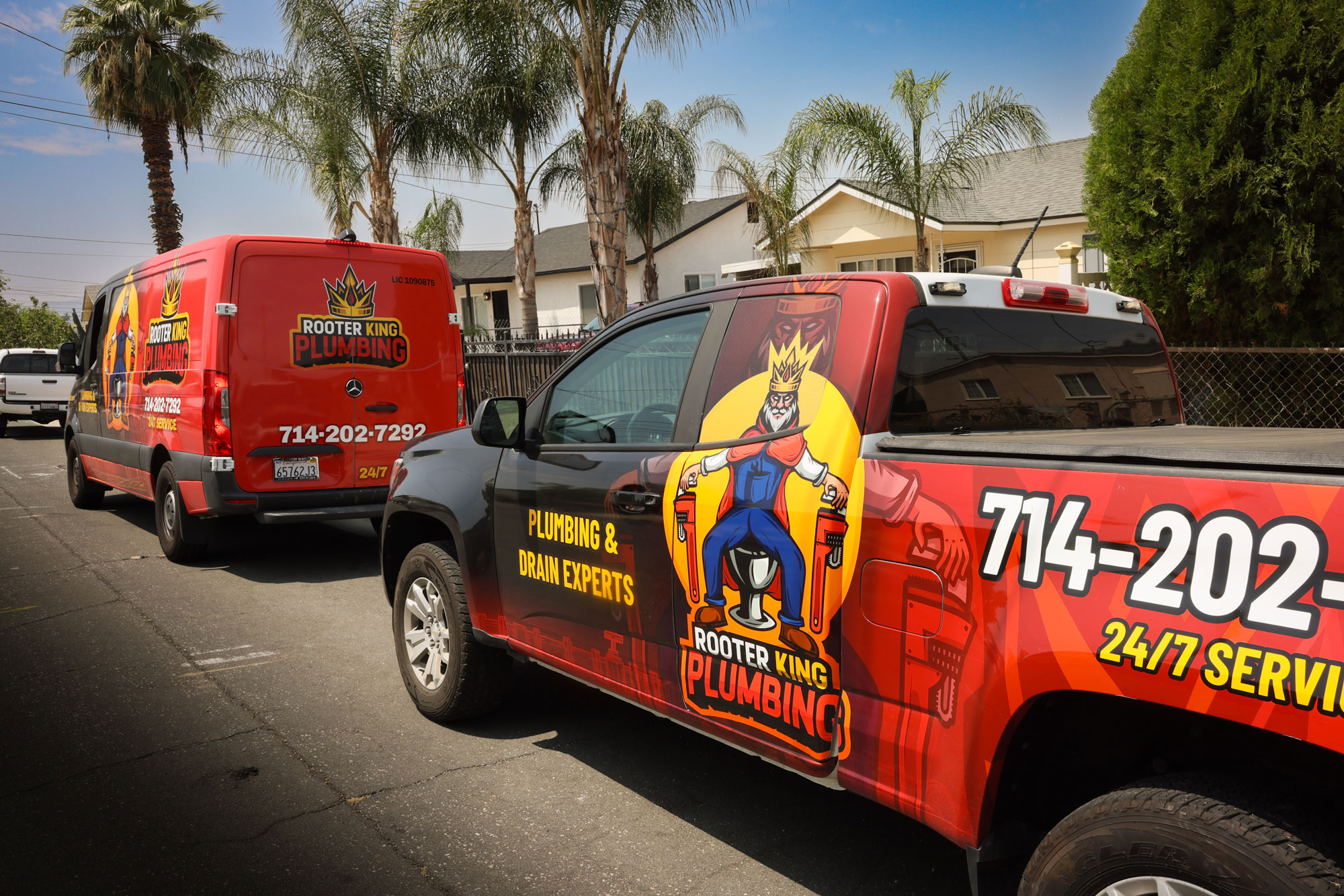
WHY CHOOSE ROOTER KING FOR PATCH REPAIR?
Precise Sonde Location
We pinpoint damage within inches before installing — so the patch goes exactly where it’s needed.
Before/After Camera
Every job gets a verification camera pass and the footage delivered to you.
Flat-Rate Pricing
One quote, one price. We’ll beat any other written trenchless estimate, guaranteed.
NSF-Compliant Resin
We use only NSF-listed, sewer-grade epoxy resins rated for 50+ year service life.
Workmanship Warranty
If a patch fails due to an installation defect, we redo it for free. Period.
Same-Day Dispatch
Most patches are completed the day of inspection — no second visit.
Testimonial Of The Month
4.8 ★ on Google from 84 Reviews
GOT TREE ROOTS IN YOUR SEWER LINE?
SEWER PATCH FAQS
Short, direct answers to the questions homeowners ask us every day.
Sewer Patch Repair FAQs
What is a sewer patch repair?
It’s a trenchless point repair: a fiberglass sleeve saturated with epoxy is positioned inside the pipe over damaged area and pressed against the pipe wall by an inflatable bladder. Once cured, it creates a structural patch — typically 2 to 6 feet long — that seals cracks, holes, joint offsets, and root intrusions with no digging.
When is patch repair the right choice?
Patch repair is ideal when the surrounding pipe is in good condition and damage is limited to one short section — for example, one crack, one root intrusion, a small offset, or a pinhole. For multiple damaged areas spread across the line, CIPP full lining or pipe bursting is usually better.
How long does a sewer patch last?
A properly installed cured-in-place patch carries a service life of 50 years or more, similar to a full CIPP liner. The cured epoxy is stronger than the original host pipe.
How much does sewer patch repair cost?
In the LA / Riverside area, trenchless patch repairs typically range $950 to $2,500 per patch depending on pipe diameter, depth, and access. Free camera inspection, flat-rate quote, beat-any-estimate guarantee.
Will I have to dig up my yard or driveway?
No. The patch is installed through an existing cleanout or accessible point in the line. No excavation, no broken concrete, no torn-up landscaping.
Can patch repair fix root intrusion?
Yes — when roots are entering at one joint, patching seals that joint completely so roots cannot re-enter. For multi-point root intrusion across the line, full CIPP lining is the better long-term fix.
Is the patch as strong as a new pipe?
Yes — the cured epoxy/fiberglass composite is structurally rated and meets ASTM F1216 standards. In most cases, the cured patch is actually stronger than the original cast iron, clay, or Orangeburg host pipe.

ONE BAD SPOT? ONE TRENCHLESS FIX.
Same-day camera inspection. Flat-rate quote. We’ll beat any written estimate. Call now to book today.
Contact Rooter King
Fix The Break, Skip The Trench — Call Today
One bad section does not mean replacing the whole line. We set a structural patch over the damaged length only. Licensed, 4.8 ★ Google-rated, available 24/7.
Call (951) 880-3727Request a Time
24/7 emergency line · CSLB #1090875 · 4.8 ★ on Google from 84 reviews
Our Service Area
Related Pipe Repair & Lining ServicesCast Iron Pipe Descaling · CIPP Pipe Lining · Sewer Patch Repair · Spray Lining · Trenchless Replacement & Repair · Pipe Bursting