 Skip to content

Commercial Plumbing in Riverside County, CA
SO-CAL’S TRUSTED LOCAL PLUMBER • 5.0★ GOOGLECommercial Plumbing for Riverside County Businesses
Commercial plumbing is a different rhythm than residential — the work is the same physics, but the tolerance for downtime is zero. A restaurant with a backed-up grease line is losing covers by the hour. A medical office with a dripping waste line is a code problem before it is a plumbing problem. We work after-hours and overnight for the businesses that cannot afford to close.
Don’t Let Your Business Operations Stop!
Our regular commercial accounts in Corona, Riverside, and Jurupa Valley include restaurants, dental and medical offices, retail centers, and small industrial. Monthly grease-trap pump-outs, quarterly hydro-jets on the main, scheduled backflow testing, water-heater rotations — set it up once and we put it on the calendar.
Plumbing Health Codes, Compliance, and Protecting Your Reputation
In the commercial sector, plumbing is intimately tied to public health and safety. Municipalities across the Inland Empire strictly enforce building codes and sanitation laws to protect the community. Failing to maintain your commercial plumbing infrastructure can have severe legal and regulatory consequences.
The Riverside County Department of Environmental Health conducts routine, rigorous inspections of food service establishments, hotels, and public facilities. A single overflowing floor drain, a lack of adequate hot water at a handwashing sink, or a failing grease interceptor can result in immediate, severe fines. In worst-case scenarios, inspectors possess the authority to instantly revoke your health permit and padlock your doors until the hazard is completely resolved.
Beyond the legal ramifications, your public reputation is on the line. In today’s highly connected digital age, a customer who experiences a disgusting, flooded bathroom or smells sewer gas in your lobby will not hesitate to post a one-star review on Yelp or Google. Those negative reviews act as a permanent, incredibly damaging stain on your brand, driving future customers straight to your competitors. Rooter King makes sure your facility not only meets but exceeds all local health and safety codes, safeguarding your license to operate and protecting the pristine reputation you have worked so hard to build.
Not sure what you are dealing with? Get a straight answer on the phone.
Call (951) 880-3727Commercial Plumbing Services We Offer
Commercial Drain Cleaning
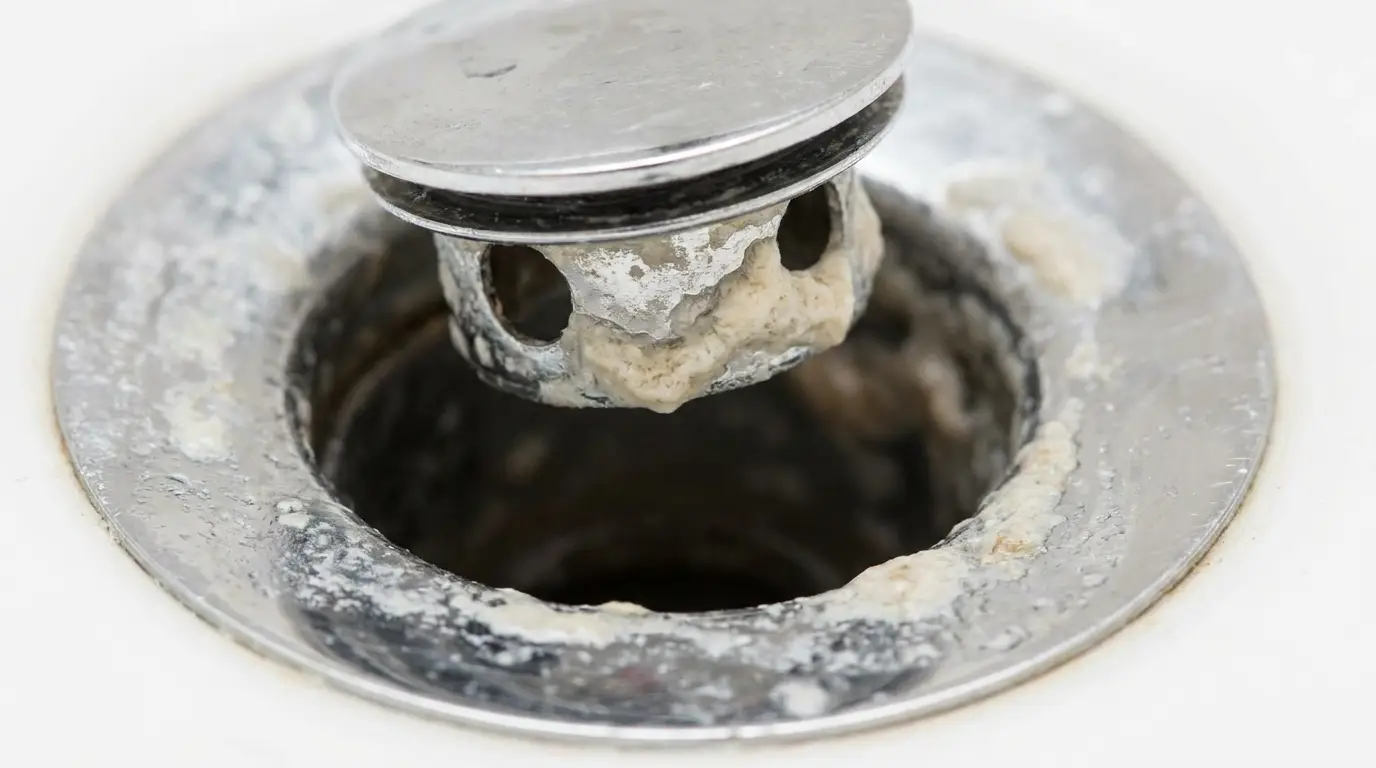
High-capacity jetting and snaking that keeps restaurant, retail, and office drains flowing under heavy daily use.
Restroom & Fixture Plumbing
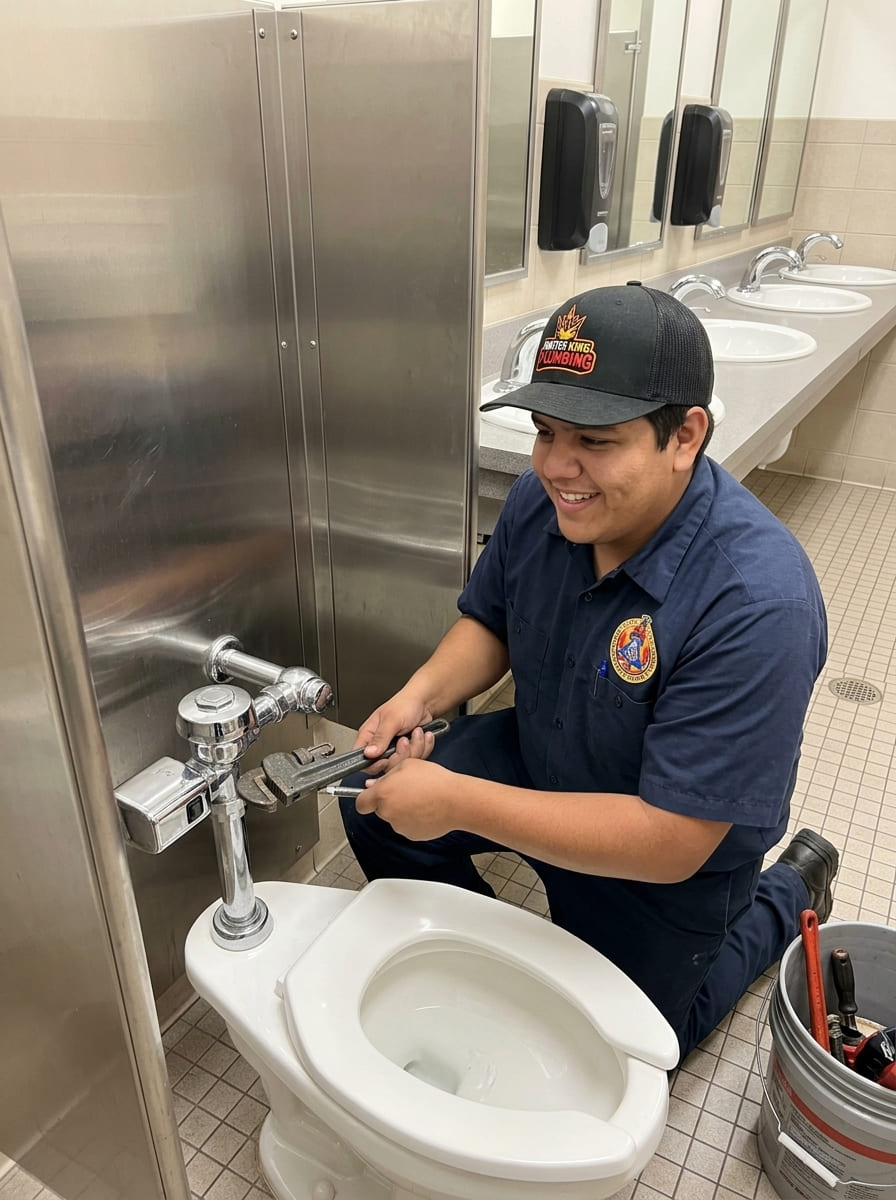
Fast repair and maintenance for high-traffic restrooms and water lines that can’t afford downtime.
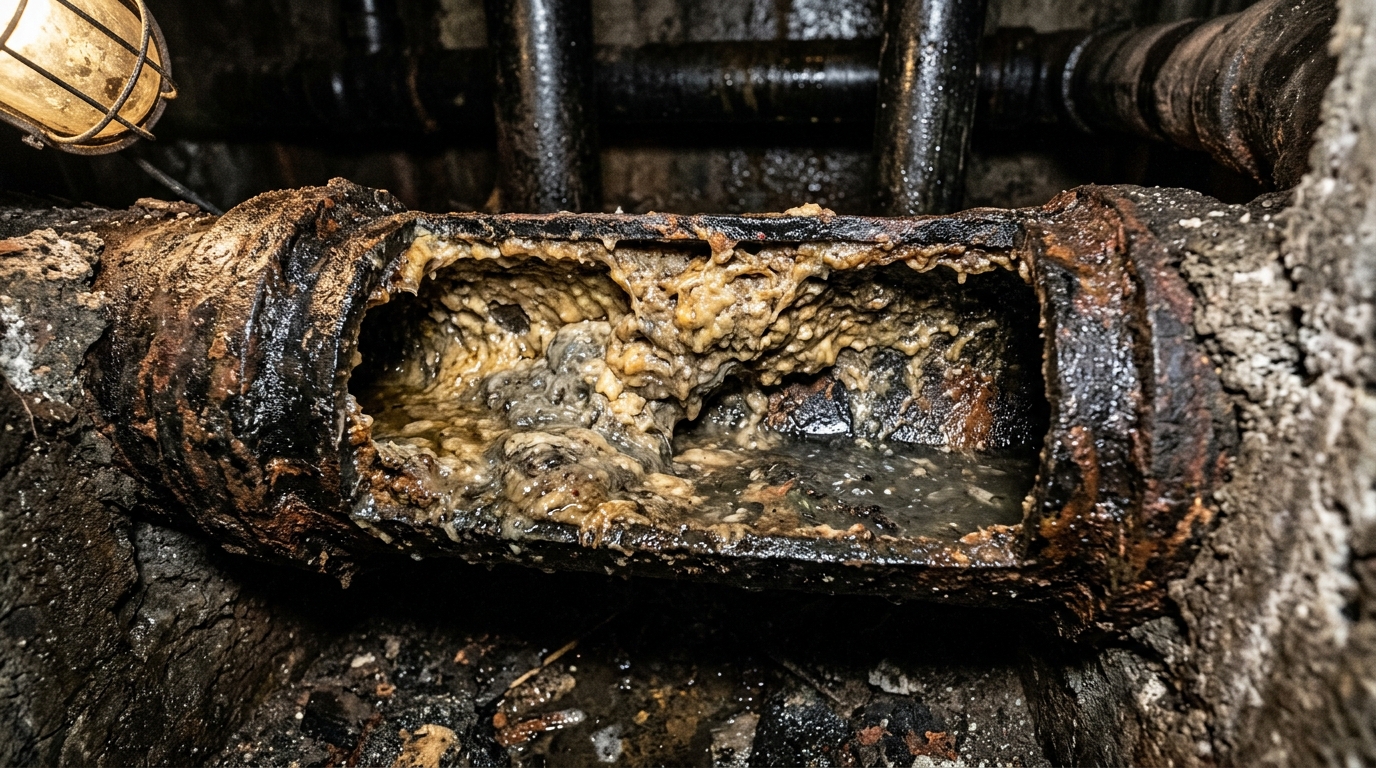
Grease Trap Service
Cleaning, pumping, and repair that keeps your kitchen compliant and your lines grease-free.
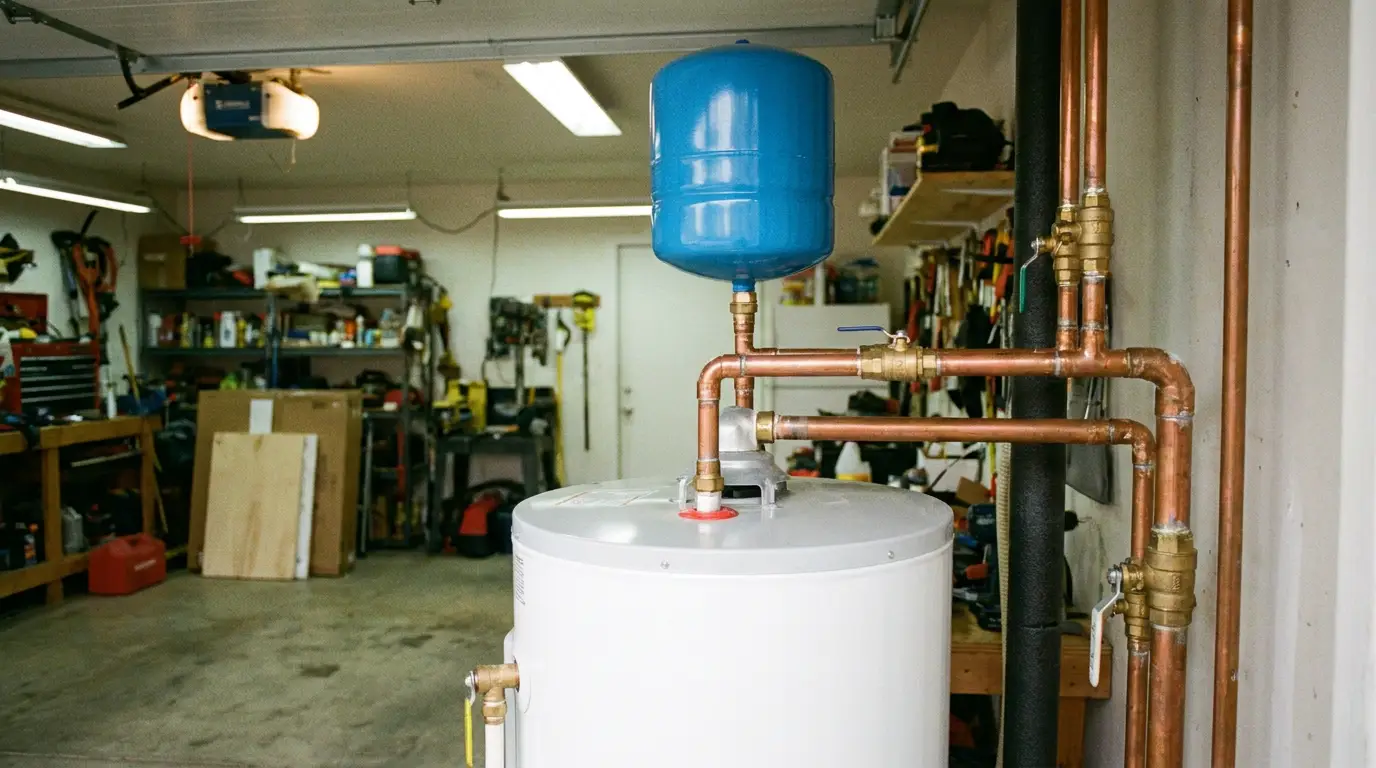
Water Heaters & Boilers
Install, repair, and service tankless, tank, and boiler systems sized for real commercial demand.
Stay open, stay compliant
What Commercial Plumbing Service Covers
For a business, a plumbing problem is a revenue problem. Here’s how we keep your doors open.
| Concern | Why it matters | What we do |
|---|---|---|
| Health-code inspection | Failing means fines or shutdown | Compliance repairs + documentation |
| Grease traps | Backups & code violations | Scheduled cleaning & pumping |
| Heavy-use drains | Downtime & lost revenue | Hydro jetting & maintenance |
| After-hours failure | Closed doors, unhappy customers | 24/7 emergency response |
Testimonial Of The Month
5-Star Service = 5-Star Reviews
24/7 live dispatch — you reach a person, not a callback queue.
Call (951) 880-3727Get Your Commercial Plumbing System Check Now!
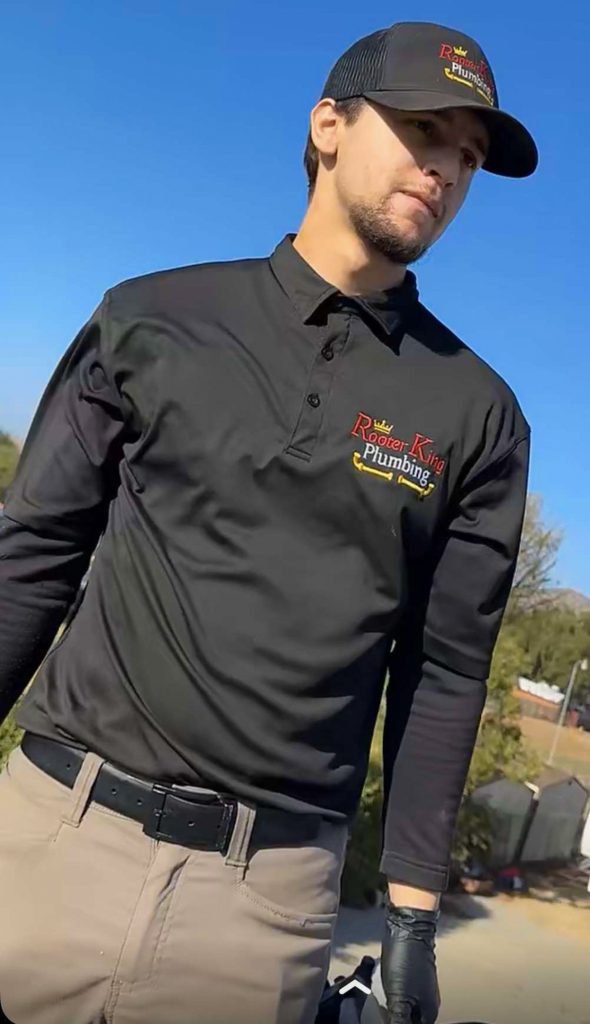
Commercial Water Heater and Boiler Systems
A lack of hot water is a critical emergency for many commercial enterprises. A hotel cannot rent rooms without hot showers, a gym will lose members if the locker rooms run cold, and a restaurant simply cannot sanitize dishes or meet health code requirements without a reliable supply of scalding water. Commercial water heating demands are massive, requiring specialized, high-capacity equipment.
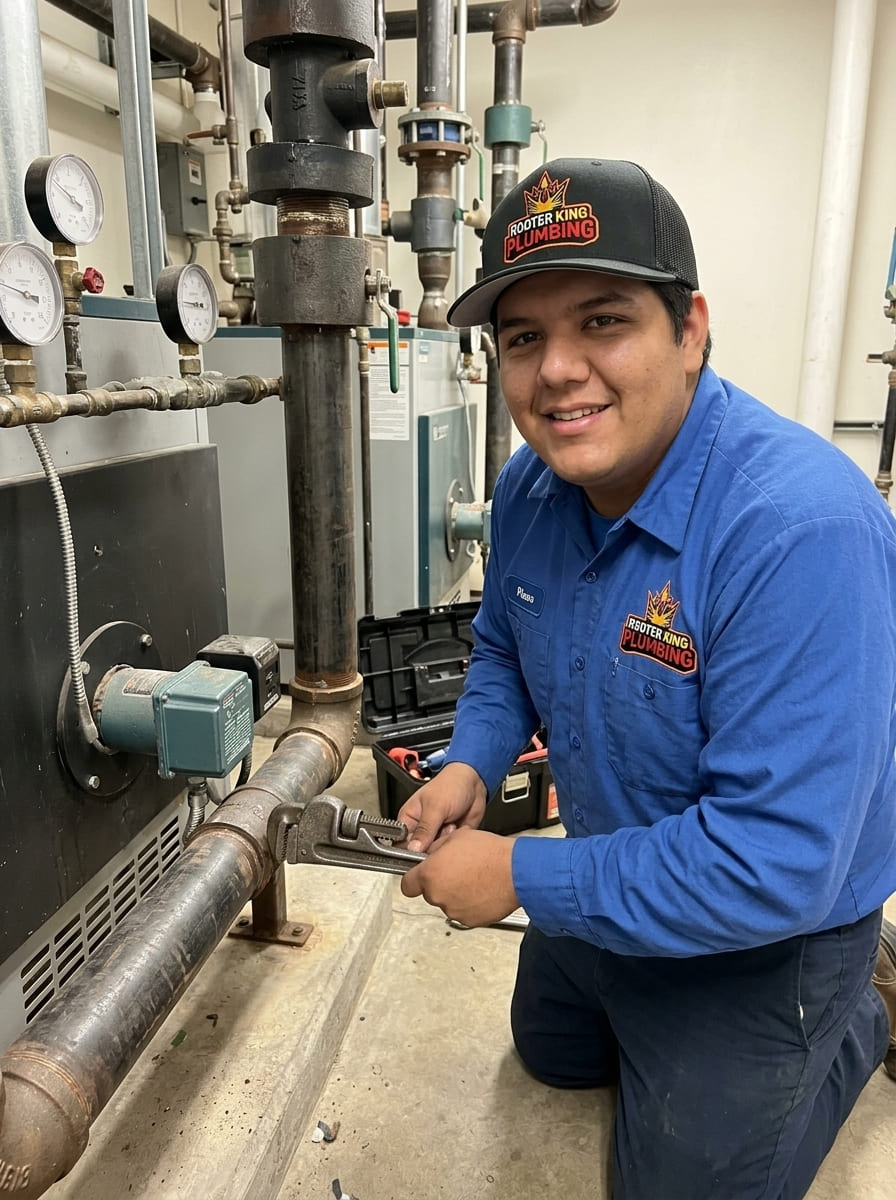
Rooter King’s commercial technicians are experts in sizing, installing, and repairing heavy-duty water heating systems.
Circulation Pump Maintenance: Large commercial buildings require heavy-duty circulation pumps to make sure hot water reaches fixtures on the top floor just as quickly as it reaches the ground floor. We repair and replace failing pumps to eliminate frustrating delays at the tap.
High-Capacity Tank Replacements: We install large, commercial-grade 100-gallon tanks with massive BTU inputs designed for rapid recovery rates, ensuring your business never runs out of hot water during peak operational hours.
Tankless Rack Systems: For the ultimate in efficiency and redundancy, we frequently upgrade commercial properties to manifold tankless rack systems. By linking several high-output tankless units together, we provide an endless supply of hot water. More importantly, if one unit requires maintenance, the others smoothly take over the load, meaning your business experiences absolutely zero downtime.
Licensed, bonded and insured. CSLB #1090875.
Call (951) 880-3727
The High Cost of Commercial Plumbing Downtime
When a plumbing system fails in a commercial building, the collateral damage extends far beyond the cost of the actual pipe repair. Business owners must look at the complete financial picture to understand why reliable, professional plumbing is so critical. Every hour that your doors are closed or your operations are hindered translates directly to lost revenue.
Imagine a retail store in Riverside that suffers a main sewer line backup. Not only do you lose the immediate sales from customers who cannot enter the store, but you also have to factor in the cost of paying employees who cannot work, the potential destruction of valuable inventory sitting in a flooded stockroom, and the expensive, specialized hazardous materials cleanup required to sanitize the property.
Also frequent plumbing issues crush employee morale. Your staff deserves a safe, clean, and fully functional environment. If they are constantly dealing with backed-up sinks in the breakroom or out-of-order restrooms, productivity plummets. Investing in expert commercial plumbing services from Rooter King is not just a facility expense; it is a direct investment in the stability, profitability, and operational efficiency of your entire enterprise.
NEED PLUMBING SERVICES? CONTACT US TODAY!
Contact Rooter King
Keep Your Business Running — Call Today
Code-compliant commercial plumbing with minimal downtime. Drains, grease traps, water heaters, and 24/7 emergency response.
Call (951) 880-3727Request a Time24/7 emergency line · CSLB #1090875 · 5.0★ on Google
Our Service Area
Free estimates on planned work across Riverside County.
Call (951) 880-3727COMMERCIAL PLUMBING IN THE INLAND EMPIRE BUILT ENVIRONMENT
The commercial building stock along the Corona, Ontario and Jurupa Valley corridors is not one thing. It runs from tilt-up distribution warehouses with long underground drain runs and sparse restroom cores, to strip retail and multi-tenant suites where several businesses share a single sewer lateral, to restaurants and food operations with grease interceptors and high-demand hot water. Each type fails in its own way, and the maintenance that keeps one running is largely irrelevant to another.
What they share is exposure to the same two local conditions that shape residential work here: water hard enough to scale equipment steadily, and expansive soils that move underground pipe over time. On a commercial property those conditions cost money in a different currency, because the consequence is rarely a wet carpet. It is a closed kitchen, an unusable restroom core, or a health inspection that does not go well.
HARD WATER IS A COMMERCIAL EQUIPMENT PROBLEM
Inland Empire water carries a significant dissolved mineral load, and every piece of equipment that heats or evaporates it concentrates that load further. Scale forms on the surfaces where heat transfers, and because mineral scale is a poor conductor it forces the burner or element to work longer to reach the same temperature. That shows up as rising energy consumption, longer recovery times, and equipment that fails earlier than the manufacturer schedule suggests it should.
For a restaurant the exposure is concentrated in the water heater, the dish machine and the ice machine. For a warehouse or office it is the water heater and any boiler or hydronic loop. In both cases the useful response is not dramatic: confirm the hardness for your address from the water provider annual quality report, size treatment or scale control to that figure rather than to a guess, and put descaling on a schedule instead of waiting for the failure. Softening or conditioning ahead of the equipment is almost always cheaper than replacing it early.
WATER HEATERS
Sediment and scale blanket the tank bottom and heating surfaces, extending recovery time and shortening service life.
DISH MACHINES
Scale on elements and spray arms degrades wash temperature and rinse coverage, which is a sanitation issue as well as a repair cost.
ICE MACHINES
Evaporator plates scale quickly on hard water, cutting production and driving service calls during your busiest season.
BOILERS AND LOOPS
Scale on heat exchange surfaces raises fuel use and creates hot spots that shorten the life of the vessel.
Talk it through with a licensed Rooter King plumber.
Call (951) 880-3727GREASE INTERCEPTORS AND THE HEALTH INSPECTION
Any commercial kitchen discharging fats, oils and grease needs an interceptor sized and maintained for its actual output, and the two most common problems we are called to are an interceptor that was sized for a smaller menu than the one being cooked, and one that is simply not being pumped often enough. Both produce the same result: grease carries past the interceptor into the lateral, cools, and hardens on the pipe wall until the line closes.
Food facilities in this region are permitted and inspected by the Riverside County Department of Environmental Health, and plumbing conditions inside a kitchen are part of what an inspector looks at. Local sewer agencies separately administer their own pretreatment requirements for grease discharge. The practical advice is unglamorous but effective: keep pumping records and manifests where you can produce them, set the service interval from how the interceptor actually looks when it is opened rather than from a default schedule, and have the lateral jetted before the busy season rather than during it.
BACKFLOW PREVENTION AND ANNUAL TESTING
Commercial properties commonly carry backflow prevention assemblies where the potable supply connects to a fire line, an irrigation system, a cooling loop or any process equipment. These assemblies protect the public supply from contamination flowing backward into it, and they are mechanical devices with springs, seats and check valves that wear.
For that reason water purveyors generally require each assembly to be tested annually by a certified tester and the results filed with them. Missed testing is one of the easiest compliance items to let slip, particularly after a change of tenant or property manager, and it is also one of the easiest to put right. If you are not certain how many assemblies exist on your site or when they were last tested, that inventory is worth establishing before a notice arrives.
WHAT MOVING SOIL DOES TO COMMERCIAL UNDERGROUND LINES
Expansive clay affects commercial sites more than owners expect, because commercial underground runs are long. A warehouse restroom core can sit far from the point of connection, so a lateral crosses a great deal of ground that swells and shrinks with the seasons. Over years that movement produces the same defects seen on residential laterals, at greater length and greater depth: settled low sections that hold standing water, and stepped joints that catch solids.
Large paved areas add their own problem. Landscape irrigation at the edge of a parking field keeps the soil there moist while the ground under the paving stays dry, so the transition zone moves the most, and that is frequently where a yard line is found to have dropped. Because digging up a loading area or drive aisle is expensive and disruptive, this is precisely where a camera inspection and accurate locate pays for itself before anyone breaks pavement.
COMMERCIAL PRIORITIES
SYMPTOM, BUSINESS RISK AND RESPONSE
How we triage commercial calls, because on a working site the cost of the plumbing is rarely the largest cost involved.
| What you are seeing | What it puts at risk | Usual response |
|---|---|---|
| Slow floor drain in a kitchen | Health compliance and a possible closure | Jetting the branch and interceptor service, then a camera check for grease hardened on the wall |
| Recurring backup in shared retail suites | Multiple tenants and lease exposure | Camera the shared lateral to find whether the defect is structural or a maintenance problem |
| No hot water in a food operation | Warewashing and sanitation | Diagnose the heater, check for scale on surfaces, and confirm recovery matches demand |
| Restroom core out of service | Occupancy and staff facilities | Isolate the affected fixtures, restore partial service first, then repair the branch |
| Water pooling in a yard or drive aisle | Pavement damage and liability | Locate before excavating; a settled yard line under paving is common on clay soils |
| Backflow test notice received | Compliance with the water purveyor | Inventory the assemblies on site, test, repair what fails, and file the results |
Same crew, same trucks, no subcontractors — call and ask.
Call (951) 880-3727PLANNED WORK, AFTER HOURS AND PHASING
Most commercial plumbing work is easier to schedule than owners assume, and scheduling it is usually cheaper than reacting to it. Jetting a kitchen line, servicing an interceptor, descaling a water heater or replacing a section of yard line can all be done outside trading hours. Where a restroom core has to come out of service, the work can normally be phased so that part of it stays open rather than closing the whole facility at once.
For multi-tenant properties the single most useful piece of preparation is knowing the layout before something fails: which suites share a lateral, where the cleanouts are, where the shutoffs are, and which sections have already been repaired. That information turns a shutdown into a targeted isolation.
TENANT IMPROVEMENTS AND WHO ISSUES THE PERMIT
Adding fixtures, relocating a kitchen, installing an interceptor or changing the use of a suite generally requires a plumbing permit, and the issuing authority follows the address. Property inside an incorporated city such as Corona, Riverside, Norco, Eastvale or Jurupa Valley is permitted through that city building department. Property in unincorporated Riverside County is permitted through the county building and safety department.
A food facility carries a second track alongside the building permit, because plan review and permitting for the food operation itself runs through county environmental health, and interceptor sizing may also need sign-off from the sewer agency. These reviews run in parallel rather than in sequence, so the useful move is to identify all of the agencies involved at the start of a tenant improvement rather than discovering the third one late.
Not sure what you are dealing with? Get a straight answer on the phone.
Call (951) 880-3727COMMERCIAL PLUMBING QUESTIONS FROM LOCAL OPERATORS
How often should a grease interceptor be pumped?
Set the interval from evidence rather than a default. Have it opened and assessed, and if the grease and solids layers are approaching the point where carryover starts, shorten the schedule. A kitchen whose menu or volume has changed since the interceptor was sized almost always needs more frequent service than the original plan assumed.
Does hard water really affect commercial equipment that much?
It affects anything that heats or evaporates water. Scale forms on heat transfer surfaces and insulates them, so burners and elements run longer for the same result, energy use rises and equipment fails earlier. Water heaters, dish machines, ice machines and boilers are the usual casualties. Treating the water is generally cheaper than replacing them early.
Who inspects the plumbing in my restaurant?
Two different tracks apply. The building permit and plumbing inspection for construction work come from the city building department, or from Riverside County for unincorporated property. The food facility itself is permitted and inspected by the Riverside County Department of Environmental Health, and the sewer agency may separately regulate grease discharge.
Can work be done outside business hours?
Usually, and it is often the better choice. Jetting, interceptor service, descaling and most yard line work can be scheduled after trading. Where a restroom core must come out of service, the work can normally be phased so part of the facility stays open rather than closing everything at once.
Several suites share one sewer line. Who is responsible?
That is determined by the lease and the property title rather than by plumbing practice, so it varies. What helps in every case is establishing the layout before a failure: which suites share a lateral, where cleanouts and shutoffs are, and what has already been repaired. A camera inspection produces that record.
Why does my yard line keep failing under the parking area?
Expansive clay changes volume with moisture, and paved sites create sharp transitions between irrigated landscape and dry ground under the paving. The soil at that boundary moves the most, so buried lines crossing it tend to settle. Locating the defect precisely before excavating is what keeps the repair from turning into a paving project.