 Skip to content


Repiping in Riverside County, CA
SO-CAL’S TRUSTED LOCAL PLUMBERWhole-Home Repiping You Can Trust in Riverside County
A full repipe is the right call when you have had two or more pinhole leaks in 18 months, when the city water turns rusty out of the cold tap, or when a remodel exposes the original galvanized lines from a 1950s build. We do whole-house PEX repipes in 1–2 days for most single-story homes. Bid is fixed, drywall patches are included, and the water stays on every night.
Why PEX over copper? It does not corrode, it does not pinhole, it flexes through the wall cavity so we cut a fraction of the holes a copper repipe needs, and the material cost is roughly a third. Copper is still the right answer for short exposed runs in a mechanical room, but for behind-the-wall whole-house work, PEX wins on every axis.
Quick answer: Rooter King repipes homes across Riverside County, CA, replacing worn galvanized or copper supply lines with PEX or copper. Most single-story homes are done in 1–2 days with a fixed bid, drywall patches included and the water back on every night. Licensed under CSLB #1090875 with a 24/7 live dispatcher.

Prepare for a repiping estimate
Explain the history of leaks, pressure problems and earlier repairs. Ask which supply lines and connections would be replaced and which remain outside the proposal. Compare materials in relation to the property and installation requirements rather than choosing from a general claim that one product is always best. Confirm shutoff planning, fixture connections, testing, permits where required and who handles wall openings and finish restoration. Ask how the team will communicate interruption of water service and what access is needed in occupied rooms. Keep the written scope so any additional work can be discussed before authorization.
Read the estimate and handover checklist
Confirm the scope before authorizing work
Ask which assessment, labour, materials and equipment the written estimate includes. Identify access openings, finish restoration, disposal and cleanup separately when they are not part of the same scope. An advertised starting price or special offer does not establish the total for every property. Confirm eligibility and any restrictions before booking. If the diagnosis changes, request an explanation of the proposed additional work and its price before approving it.
Keep a useful record of the visit
Before the visit ends, ask what was found, what was changed and how the result was checked. Confirm whether photographs, video or test results are included for your particular job rather than assuming every service provides the same records. Keep the estimate, invoice and any supplied documentation together. Ask what symptoms would justify another call and which maintenance tasks, if any, are recommended. Request applicable warranty terms in writing, including exclusions and any conditions you need to follow.
Arrange the appointment and access
Describe the problem, your location and who can authorize work. Mention tenants, locked gates, restricted parking and relevant access concerns. An online request is a request for contact; confirm the appointment and current availability with the team. For an urgent problem, use the phone number on the page instead of assuming a form has triggered dispatch. Keep people and pets away from an affected work area.
Signs Your Home Needs Repiping
Plumbing systems do not just suddenly die overnight. They degrade slowly, usually giving you plenty of warning signs before a catastrophic failure occurs. The problem is that many homeowners either don’t know what to look for or choose to ignore these subtle hints, hoping the problem will just go away.
If you live in a home built before the 1990s, your plumbing is likely nearing the end of its natural lifespan. Here are the top indicators that it is time to stop patching leaks and start fresh with a Rooter King repipe:
- Constant, “Whack-A-Mole” Leaks: If you have had to call a plumber three or four times in the last couple of years to fix different pinhole leaks under your sinks, behind your toilet, or in your ceiling, your system is failing. Fixing one weak spot simply forces the water pressure to find the next weakest link.
- Rusty, Discolored, or Foul-Tasting Water: Turn on your faucet first thing in the morning. If the water sputters out looking brown, yellow, or orange before clearing up, the inside of your galvanized steel pipes is literally rusting away. This is not just gross; it’s a sign that the metal is paper-thin and ready to burst.
- Dismal Water Pressure: Does taking a shower feel like standing under a weak trickle? As pipes age and corrode, the rust and hard-water scale build up on the inside, severely choking off the inner diameter of the pipe. Water simply cannot physically squeeze through the blockage, resulting in a frustrating drop in pressure house-wide.
- The “Flush and Freeze” Effect: If you are in the shower and someone flushing a toilet or turning on the washing machine causes your shower water to suddenly turn scalding hot or freezing cold, your pipes are too restricted to supply adequate water volume to multiple fixtures at once.
- Visible Crust and Corrosion: Take a flashlight and look at the exposed pipes near your water heater, under your sinks, or in your crawlspace. If you see thick white, crusty buildup, green oxidation (patina) on copper, or actual flaking rust, those pipes are actively degrading and are a massive flood risk.
Any one of these can be a single bad fitting; two or more together is a strong signal that the original supply lines are reaching the end of their life.
Tired of Patching Pinhole Leaks?
Get a fixed bid for the whole house: drywall patches are included and your water stays on every night.
The U.S. Environmental Protection Agency (EPA) explains that lead pipes are more likely to be found in homes built before 1986, and that metals get into tap water when plumbing materials corrode. Replacing worn supply lines removes that corroding metal from the path your drinking water takes.
Repiping Services We Offer
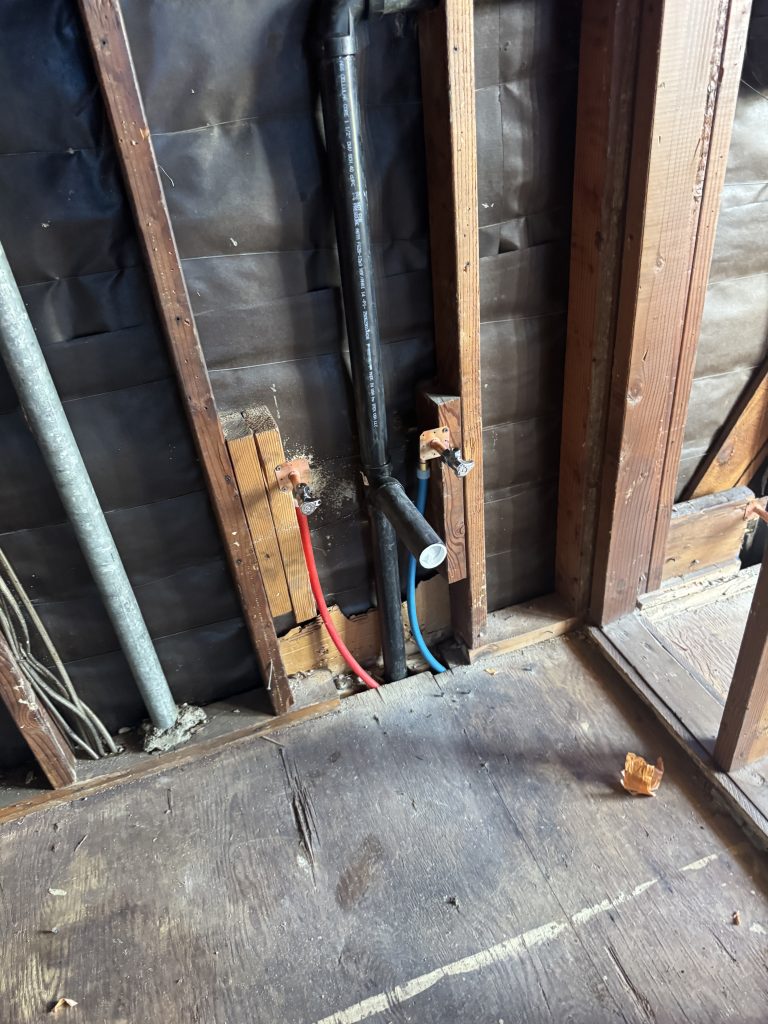
Galvanized Pipe Replacement
Old galvanized pipes corrode, choke your water pressure, and leak. We replace them entirely for clean water and full flow.
Best when: your home still runs on its original galvanized steel supply lines and pressure keeps dropping.
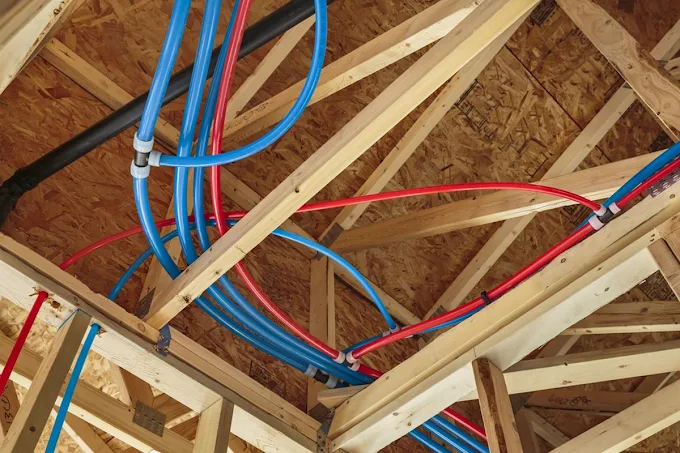
Whole-Home PEX Repiping
Fast, affordable, and freeze-resistant — PEX is the modern standard for a full-home repipe with minimal wall damage.
Best when: budget and install speed matter most and you want fewer wall cuts.
Copper Repiping
Premium, long-lasting copper repiping for homeowners who want the most durable system available.
Best when: you want the longest-lasting system and plan to stay in the home or protect resale value.
PEX or copper?
PEX vs. Copper Repiping
Both beat old galvanized pipe by a mile. Here’s how the two modern options compare.
| Factor | PEX | Copper |
|---|---|---|
| Upfront cost | Lower | Higher |
| Lifespan | 40+ years | 50+ years |
| Install speed | Faster, fewer wall cuts | Slower |
| Freeze resistance | Flexes, resists bursting | Can split |
| Best for | Budget & speed | Longevity & resale |
Testimonial Of The Month
4.8 ★ on Google from 84 Reviews
Why Supply Lines Wear Out in Riverside County, CA
Two things decide how long the pipes inside a Riverside County home last: what they are made of and what the water does to them. Riverside Public Utilities’ 2025 Water Quality Report puts the city’s tap water at an average total hardness of 197 mg/L, about 12 grains per gallon, and names corrosion of plumbing materials as the most common way lead and copper get into drinking water. If only one run is failing, a targeted pipe repair may be enough, and a leak under the concrete floor is handled as a slab leak repair.
- Hard water: at about 12 grains per gallon, mineral scale builds up inside older galvanized lines and narrows them, which is why pressure fades before a pipe actually leaks.
- City water tests within limits: RPU’s 2025 tap sampling in 51 homes found none over the action level for copper or lead, so rusty or green-stained water in one house points to that house’s own pipes.
- Waiting costs more: every new pinhole means another wall opened and patched, while a repipe opens the walls once. If a hidden leak has already soaked a wall, leak detection finds it before the new lines go in.
The Hidden Costs of Ignoring Old Pipes
It is an incredibly common human instinct to look at a small, brown water stain on the ceiling and decide to ignore it because you are too busy to deal with a contractor. We understand that repiping is a major investment, and it is tempting to delay the project for just one more year. However, as professional plumbers, we have to be honest: delaying a necessary repipe is almost always a financially devastating mistake. Water is relentless, and it never stops working to destroy your property.
The most immediate and severe consequence of ignoring failing pipes is the rapid development of toxic mold. The U.S. EPA notes that mold spores float through indoor and outdoor air, and that wet materials dried within 24 to 48 hours usually do not grow mold. When an old pipe has a slow, hidden leak inside your wall cavity, it creates the absolute perfect breeding ground. Drywall and wooden studs behind that leak never get the chance to dry, so mold can spread across them. If you ignore a failing plumbing system, a standard repipe project quickly spirals into a massive, hazardous material remediation nightmare, requiring you to pay specialized teams thousands of dollars to decontaminate your home.
Also water absolutely destroys your home’s building materials. Hardwood floors will act like a sponge, absorbing the hidden moisture until the planks cup, warp, and violently snap, requiring a complete, expensive replacement. Drywall will lose all structural integrity, turning to mush and crumbling to the floor. The wooden framing holding up your house will begin to rot, compromising the load-bearing strength of your walls and inviting termites.
Finally, ignoring old pipes can ruin your relationship with your homeowner’s insurance provider. Many insurance companies will completely drop coverage or refuse to write a new policy for homes that still rely on 50-year-old galvanized plumbing because the risk of a catastrophic flood is simply too high. Repiping your home is not just an upgrade; it is the ultimate insurance policy to protect your largest financial asset.

How the Repiping Process Actually Works (Without Destroying Your Home)
The number one reason people delay a repipe is the fear of the process itself. You are probably envisioning a crew using sledgehammers to destroy your beautiful home, leaving you to live in a hotel for a month. Let us put your mind at ease. Rooter King uses a highly strategic, minimally invasive process designed to keep your home livable and limit drywall damage to an absolute minimum.
Here is exactly what you can expect when you hire Rooter King for a whole-home repipe:
Phase 1: Deep Protection and Preparation. We respect your home. Before a single tool is lifted, our crew meticulously preps the work areas. We lay down heavy-duty canvas drop cloths over your hardwood and tile floors. We seal off furniture and electronics with thick plastic sheeting to protect them from dust. We wear protective shoe covers every time we enter your house. We treat your property as if it were our own.
Phase 2: Strategic Access and Routing. This is where the magic of modern repiping happens. We do not tear down entire walls. Instead, our highly trained technicians make small, precise, square cuts in your drywall (usually just 12×12 inches) at strategic locations—such as behind sinks, behind toilets, and at key junction points in the ceiling.
Because we use flexible PEX tubing, we can feed the new water lines directly through the hollow-wall cavities and up into the attic, navigating the skeleton of your house without exposing the entire pipe. During this entire phase (which takes a few days), your old plumbing system remains fully active, meaning you still have running water, you can still take showers, and you do not have to move out of your house.
Phase 3: The “Cut-Over” Day Once the new plumbing skeleton is fully routed through the house, we schedule the “cut-over.” This is the only day your water will be turned off. We arrive in the morning, shut off the main water supply, safely drain your old, decaying pipes (which are typically abandoned harmlessly inside the walls), and connect your fixtures to the brand-new system. By the time you get home from work that evening, you will have a brand-new, high-pressure plumbing system.
Phase 4: Inspection and Restoration.n We do not consider the job finished when the water turns on. We rigorously pressure-test the entire system to make sure it exceeds California building codes. We handle all the municipal permits and coordinate with the city inspector for final approval. Once approved, we can provide expert drywall patching. We don’t just leave you with gaping holes; our trusted drywall specialists will smoothly patch, texture, and prep the access points so your walls look exactly as they did before we arrived.
Contact Rooter King
Patching Leak After Leak? Call Today
Better pressure, clean water, and no more leaks. PEX or copper whole-home repiping across Riverside County, permitted and warrantied.
Call (951) 880-3727Request a Time
CSLB #1090875 · 24/7 live dispatcher
Our Service Area
Rooter King Plumbing, 509 N Smith Ave Unit 105, Corona, CA 92878
Frequently Asked Questions
How do I know if I need a repipe?
Frequent pinhole leaks, rusty or discolored water, low pressure, and galvanized pipe more than 50 years old are all signs a whole-home repipe is due.
How long does a repipe take?
Most homes are repiped in one to three days, depending on size and access. We work to keep your water on as much as possible.
What pipe do you use for repipes?
We repipe with PEX or copper, and we will walk you through the benefits of each for your home and budget.
Will you patch the walls afterward?
We open as few access points as possible and coordinate clean, patched drywall so your home is put back together.
Related Pipe Repair & Lining ServicesCast Iron Pipe Descaling · CIPP Pipe Lining · Sewer Patch Repair · Spray Lining · Trenchless Replacement & Repair · Pipe Bursting