 Skip to content

Water Heaters in Riverside County, CA
SO-CAL’S TRUSTED LOCAL PLUMBER • 5.0★ GOOGLETank Water Heater Repair & Installation in Riverside County
A storage tank is still the simplest way to heat water for most homes, and when one is chosen and installed well it asks very little of you. Rooter King Plumbing matches capacity and recovery rate to how the household actually uses hot water, then fits the unit with correct venting, seismic strapping, a pan where the location needs one, and connections that can be serviced. We repair and flush tanks as readily as we replace them.
Get in Touch For A New Tank Water Heater!
Repair vs. replace is the first call we make. A thermocouple, a pilot assembly, a sediment flush, or an anode rod swap — those are repairs worth doing. A leaking tank itself is not. We will tell you which one you have and what the new install would actually cost, including the haul-off of the old unit and any permit pulls if the city wants one.
We are not here to sell you equipment you don’t need or confuse you with overly technical plumbing jargon. Our highly trained, fully licensed technicians are here to accurately diagnose the problem, explain your options in plain English, and restore the heartbeat of your home’s plumbing system as quickly and safely as possible. from a simple thermostat replaced, a heavy tank hauled away and upgraded, or a modern tankless system installed, Rooter King provides the transparent pricing and top-tier craftsmanship you deserve.

Recognizing When Your Tank Water Heater Needs Repair
Most homeowners naturally assume that as long as hot water is coming out of the faucet, the water heater is perfectly fine. However, these hardworking appliances rarely fail out of nowhere. They usually give you several subtle (and sometimes not-so-subtle) warning signs that internal components are struggling, wearing out, or on the verge of total collapse. Catching these signs early can often mean the difference between a quick, affordable repair and having to completely replace a ruptured unit.
If you are experiencing any of the following issues, it is time to call Rooter King for a professional diagnostic:
Unexplained Moisture or Small Puddles: Never ignore water pooling around the base of your unit. While it could be a simple fix like a loose supply line or a faulty Temperature and Pressure (T&P) relief valve, it is very often the first sign of a microscopic fracture in the inner tank.
Inconsistent Water Temperatures: If your shower starts out scalding hot but turns freezing cold within five minutes, or if the water never seems to get quite as hot as it used to, you likely have a failing heating element (in an electric heater) or a malfunctioning gas thermocouple or burner assembly.
Strange Noises (Popping, Rumbling, or Banging): Your water heater should operate relatively quietly. If it sounds like a percolating coffee pot, or if you hear loud popping and banging noises coming from the tank, you are hearing the sound of water boiling violently underneath a thick, hardened layer of mineral sediment at the bottom of the tank. This causes the tank to severely overheat and weakens the steel.
Discolored or Rusty Water: If you turn on the hot water tap and the water looks brownish, yellow, or has a distinct metallic smell, the interior lining of your steel tank is actively rusting away. Once the rust eats through the steel, the tank will burst.
Low Hot Water Pressure: If the cold water pressure in your home is fine, but the hot water pressure is a mere trickle, there is likely a severe buildup of calcium and hard water scale blocking the water lines exiting the heater, or a failing shutoff valve.
Traditional Water Heater Services We Offer
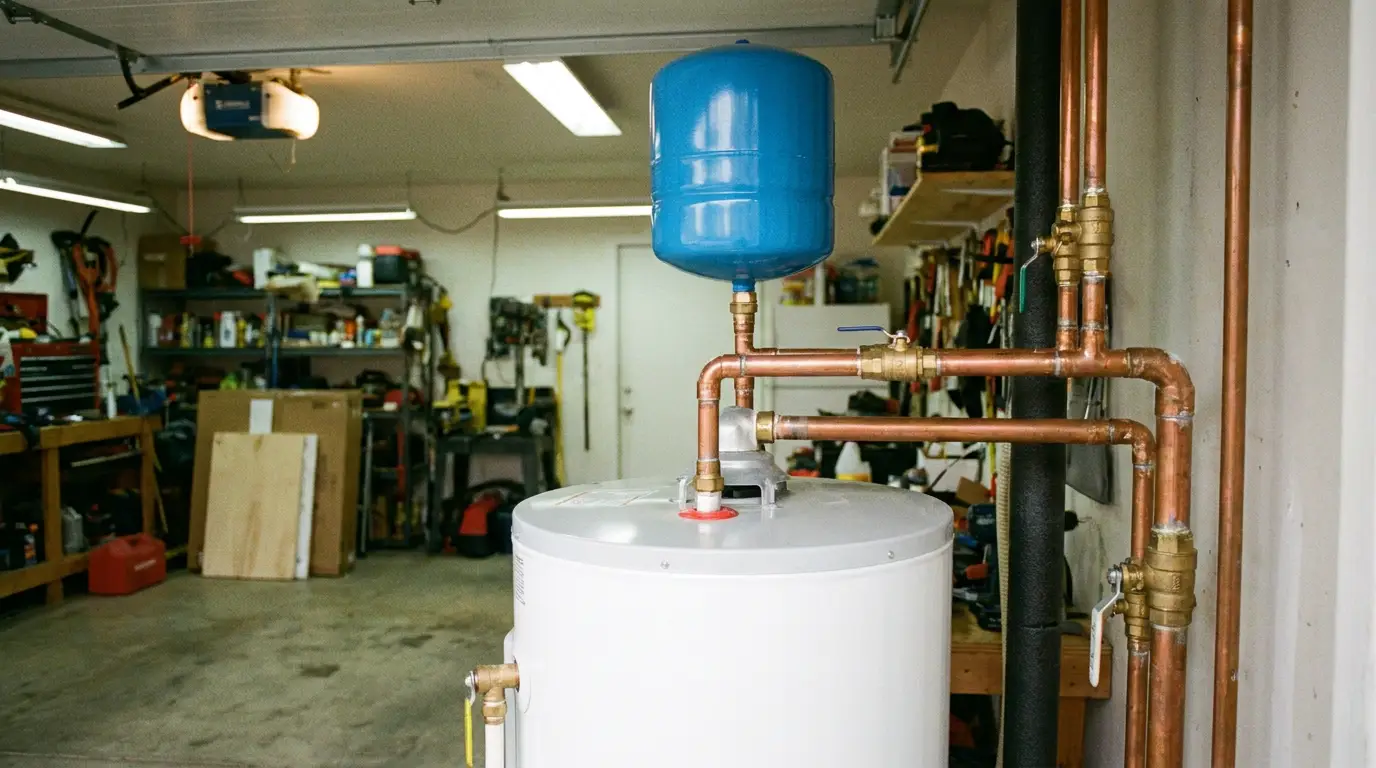
Tank Water Heater Repair
No hot water, leaks, or rumbling sounds? We diagnose and fix gas and electric tank heaters — often the same day.
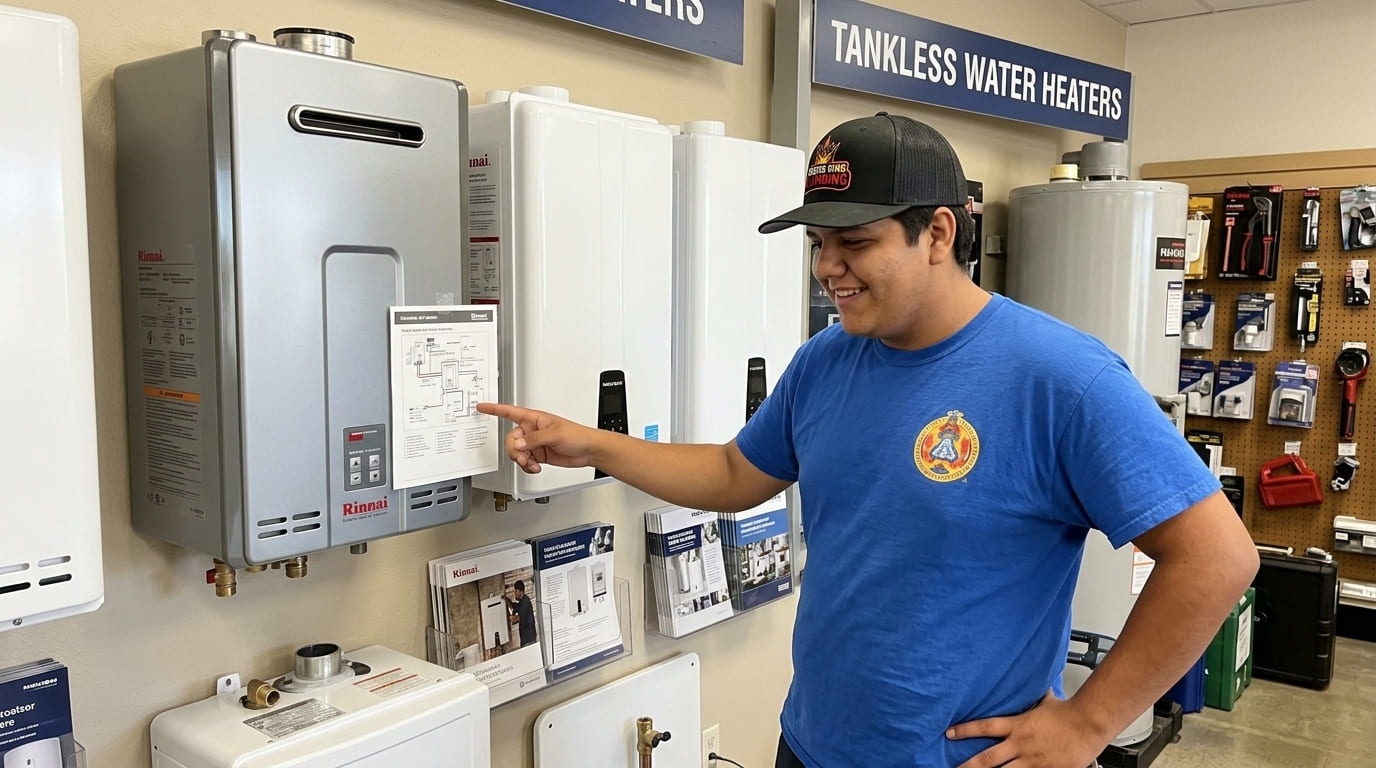
Tank Water Heater Installation
We remove the old unit and install a right-sized 40–50 gallon tank to code, with seismic strapping and a new T&P valve.
Repair or replace?
Should You Repair or Replace Your Water Heater?
Age and symptom usually make the call. Here’s the quick guide.
| Your situation | Best move |
|---|---|
| Under 8 years old, minor fault | Repair |
| 10+ years old or the tank is leaking | Replace |
| No hot water (element or pilot) | Repair |
| Rusty water or corroded tank | Replace |
| You want endless hot water | Upgrade to tankless |
Decoding Common Water Heater Error Codes (Rheem, Rinnai, Navien, & More)
Staring at a digital display flashing a random number, or a little red light blinking on an old gas tank, is incredibly frustrating. It feels like your water heater is speaking an alien language. But those codes are actually the machine’s way of crying out for help.
When Riverside County homeowners frantically search Google for “what does this water heater error code mean,” they are usually dealing with one of the major brands. Here is a human-friendly breakdown of the most highly searched error codes and what they actually mean for your plumbing:
Rheem & Ruud Water Heaters Error Codes
Rheem is one of the most common brands found in Southern California homes.
- Code 11 (Tank): Ignition Failure. The unit is trying to light the gas burner but failing. This could mean your gas is turned off, the igniter is dirty, or the gas valve is failing.
- Code 12 (Tank): Flame Failure. The heater lights up, but the flame immediately goes out. Usually, this means the flame rod (the sensor that detects the fire) is coated in carbon buildup and needs to be professionally cleaned or replaced.
- Code 29 (Tank): Heat Exchanger Maintenance. This is a huge one in our area. It means the heater has detected a massive buildup of hard water scale inside the heat exchanger. The unit needs an immediate, professional chemical flush before it completely overheats and breaks.
- Flashing Red Light (Standard Tanks): If you have a traditional gas tank, the honeywell gas valve often has a status light.
- 1 Flash every 3 seconds: Normal operation.
- 2 Flashes: Low thermopile voltage (the pilot light is too weak to generate the electricity needed to open the gas valve).
- 4 Flashes: High-temperature limit switch tripped. The water got dangerously hot, and the system shut itself down to prevent an explosion. Do not try to reset this yourself without a plumber checking the thermostat first.
A.O. Smith Standard Tank Error Codes
A.O. Smith units are fantastic, but they are highly sensitive to water quality and gas pressure.
- Code 11: No ignition. Just like Rheem, the unit isn’t getting gas or the spark isn’t firing.
- Code 12: Flame failure. The burner lights but won’t stay lit.
- Code LC (or LC00 – LC09): Scale Build-up. This code specifically means the unit is choked with calcium and magnesium from Riverside’s hard water. “LC” stands for Limiting Condition. If you see this, call Rooter King to perform a descaling flush immediately to restore efficiency.
- Code 10: Air supply or exhaust blockage. Something (like a bird’s nest or heavy debris) is blocking the exhaust pipe on your roof or the side of your house, causing a dangerous backup of carbon monoxide.
Bradford White Tank Water Heater Error Codes
Bradford White units feature highly detailed digital displays that make diagnostics slightly easier.
- Error E003: Ignition failure. The spark igniter or the gas supply is compromised.
- Error E030: Exhaust overheat. The exhaust gas temperature has gotten way too high. This often happens if the unit hasn’t been flushed and the heat exchanger is working too hard to push through scale buildup.
- Error E046: Heat exchanger thermistor abnormality. Again, this almost always points back to a lack of routine maintenance and severe hard water scaling that is confusing the temperature sensors.
A.O. Smith & Bradford White (Standard Tanks) Error Codes
These classic brands often use a blinking LED light on the gas control valve to communicate issues.
- 3 Flashes: Draft failure. The sensor detects that the exhaust gases are not safely venting up the chimney or flue pipe, creating a massive carbon monoxide hazard in your home.
- 7 Flashes: Flammable vapor sensor lockout. The water heater has detected flammable vapors (like spilled gasoline, paint thinner, or heavy cleaning chemicals) in the air near the unit and has permanently locked itself out to prevent a house fire. Never try to bypass this safety feature.
Disclaimer: Error codes are a diagnostic starting point. Messing with gas lines, high-voltage electricity, or carbon monoxide venting without a license is incredibly dangerous. If your unit is throwing codes, shut it off and call the professionals at Rooter King.
Testimonial Of The Month
5-Star Service = 5-Star Reviews
The Impact of Hard Water on Your Riverside County Plumbing
Understanding the local environment is key for maintaining a healthy plumbing system. One of the biggest challenges homeowners face in the Inland Empire is the incredibly high concentration of dissolved minerals in the municipal water supply, commonly referred to as “hard water.”
According to data from the U.S. Geological Survey (USGS), the water in Southern California is famously hard because it travels through miles of limestone and rock aqueducts before reaching your home, picking up heavy loads of calcium and magnesium along the way. While these minerals are completely harmless to drink and are actually good for human health, they are absolutely devastating to your water heater and your home’s internal piping.
When hard water enters your water heater and the temperature rises, a chemical reaction occurs that forces the dissolved calcium to precipitate out of the liquid. It aggressively clings to the hottest surfaces it can find—which are the electrical heating elements or the steel bottom of a gas-fired tank. Over just a few years, this creates a thick, chalky white scale.
This scale acts as a powerful insulator. Instead of the gas burner heating the water directly, it now has to heat a solid block of calcium first. This wastes an immense amount of energy, drives up your monthly gas or electric bill, and causes the tank’s metal to become incredibly fatigued from overheating. It also drastically reduces the actual volume of water your tank can hold; a 50-gallon tank half-full of hardened sediment yields only 25 gallons of hot water. If you live in Riverside County, having Rooter King perform an annual flush to combat this local hard water issue is not just a suggestion; it is a vital necessity to protect your appliances.
Schedule Your Tank Water Heater Installation Today!
Gas vs. Electric Tank Water Heaters: Making the Right Choice
When it comes time for a water heater replacement, many homeowners wonder if they should stick with their current fuel source or make a switch. The choice between a natural gas water heater and an electric water heater comes down to several factors, including your home’s existing infrastructure, your upfront budget, and your long-term energy goals.
Natural Gas Water Heaters Gas water heaters are incredibly popular in Southern California because natural gas has traditionally been a very affordable utility.
The Cons: Gas heaters are generally more expensive to purchase upfront. They also require proper, code-compliant exhaust venting to safely direct carbon monoxide out of your home, and running a new gas line to a different part of the house can be a major construction project.
The Pros: Gas heaters have incredibly fast recovery rates. This means that after you take a long shower and drain the tank, a gas burner can heat a brand-new batch of cold water much faster than an electric element can. They also typically cost less to operate month-to-month compared to electric models. Also during a power outage, a standard gas water heater with a standing pilot light will still provide you with hot water.
Electric water heaters use heavy-duty conductive elements submerged inside the tank to heat the water, functioning very much like a giant electric kettle.
- The Pros: Electric units are usually cheaper to purchase upfront than their gas counterparts. They are also incredibly efficient at the point of use, as all the energy consumed goes directly into the water (whereas gas heaters lose some heat up the exhaust flue). They do not require complex venting, making them easier to install in tight spaces or closets.
- The Cons: In California, electricity is often significantly more expensive than natural gas, so your monthly operating costs may be higher. They also have much slower recovery rates, meaning you will wait longer for the tank to reheat after a heavy draw. And, if the power grid goes down, you lose your hot water entirely.
Our Rooter King experts will evaluate your home’s current setup, discuss your family’s hot water usage habits, and provide honest, transparent advice to help you select the perfect, most cost-effective unit for your lifestyle.
NEED WATER HEATER SERVICES? CONTACT US TODAY!
Traditional Water Heater — Riverside County Service Areas
Same-day tank water heater repair and replacement across Riverside County. Pick your city below for local pricing and turnaround times.
Traditional Water Heater in Corona, CA
Same-day 40, 50 & 75-gal tank swap.
Traditional Water Heater in Eastvale, CA
Gas & electric tank replacement.
Traditional Water Heater in Norco, CA
Code-strapped install, written quote.
Traditional Water Heater in Jurupa Valley, CA
Tank repair & full replacement.
Traditional Water Heater in Riverside, CA
40 to 75-gallon tank service.
Traditional Water Heater in Palm Springs, CA
Gas tank install & T&P replace.
Traditional Water Heater in Palm Desert, CA
Same-day gas & electric tank swap.
Traditional Water Heater in Rancho Mirage, CA
Tank water heater replacement.
Traditional Water Heater in Indian Wells, CA
Premium tank install & service.
Traditional Water Heater in Bermuda Dunes, CA
Tank repair, swap, and code-strap.
Water Heater FAQs
How long does a traditional tank water heater last?
A standard tank water heater usually lasts 8–12 years. Hard water in Southern California can shorten that, which is why annual flushing matters.
What size water heater do I need?
It depends on your household size and hot-water habits — 40-gallon for smaller homes, 50-gallon for most families, and 75-gallon for large households. We’ll help you size it correctly so you’re never short on hot water.
What are the signs my water heater is failing?
Watch for rusty or discolored hot water, popping or rumbling noises, water pooling around the base, or simply running out of hot water faster than usual. Any of these means it’s time to have it checked.
Gas or electric — which water heater is better?
Both work well; the right choice depends on your existing hookups and usage. Gas units heat faster and cost less to run, while electric units are simpler to install. We’ll walk you through the trade-offs for your home.
How fast can you replace a failed water heater?
In most cases we can replace a failed unit the same day. We keep common sizes stocked and offer 24/7 emergency service so you’re not stuck without hot water.
Do you haul away my old water heater?
Yes. Removal and proper disposal of your old unit is included with every installation — we leave the space clean.
Contact Rooter King
Need a Water Heater? Call Rooter King Today
Repair or replace, gas or electric — same-day water heater service across Riverside County, 24/7.
Call (951) 880-3727Request a Time24/7 emergency line · CSLB #1090875 · 5.0★ on Google
Our Service Area
Frequently Asked Questions
How long does a tank water heater last?
Most tank water heaters last 8 to 12 years. If yours is older, leaking, or running out of hot water, it may be time to replace it.
Can you replace my water heater the same day?
In most cases yes. We stock common sizes and can swap a failed unit quickly. Call (951) 880-3727 to check availability.
What size water heater do I need?
It depends on household size and usage. A 40-gallon tank suits many homes, while larger families often need 50 gallons or more. We will size it for you.
Do you handle the permit and old-unit removal?
Yes. We pull the permit where required, install to code, and haul away your old water heater.
COMPARE BEFORE YOU BUY
Not sure a storage tank is the right call? Start at the hub — it lays the two system types side by side and covers sizing.