 Skip to content

Quick answer: Rooter King pinpoints hidden water leaks — slab, wall, and underground supply line — without tearing open your home. We locate the leak first with electronic acoustic sensors and thermal imaging, then give you a clear repair quote before any work starts. Leak detection is a flat $99, and we run it 24/7 across Riverside County and the Coachella Valley.
Call (951) 880-3727ELECTRONIC – NON-INVASIVE – SAME-DAY SERVICE
$99 LEAK DETECTION & LEAK REPAIR — FIND IT FAST. FIX IT RIGHT.
When you hear water running but every fixture is off — or your water bill just doubled — Rooter King’s electronic leak detection finds the exact location of slab leaks, water line leaks, and hidden leaks without tearing up your floors, walls, or yard. Then we repair it the same day in most cases.- Non-invasive electronic locating
- Same-day detection & repair
- Slab, water-line & pressure leaks
- Written diagnosis & flat-rate quote
Always On Time & On Budget. Licensed · CSLB- #1090875
LIMITED TIME $99
CLAIM YOUR $99 SPECIAL
Detection FREE when we do the repair. Same-day appointments available.OR
The Basics – What is it?
WHAT IS PROFESSIONAL LEAK DETECTION?
The smart way to find hidden water leaks — before they destroy your floors, walls, or foundation.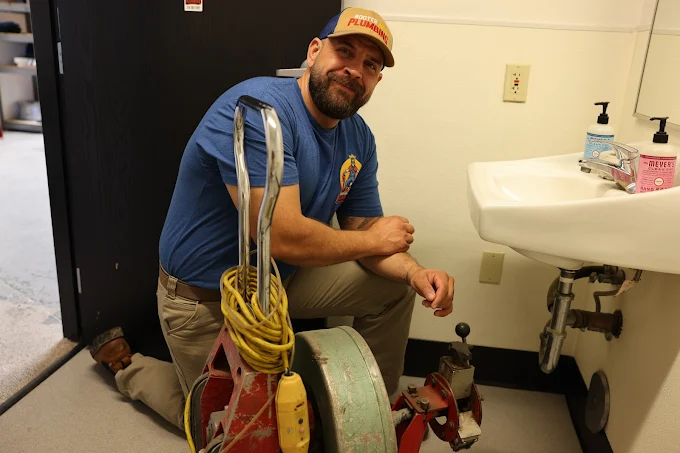
FIND THE LEAK. SAVE THE WALL.
Professional leak detection is the process of pinpointing the exact location of a hidden water leak inside a pressurized plumbing system — without unnecessary demolition. Using a combination of electronic listening devices, acoustic amplifiers, thermal imaging, pressure testing, and tracer-gas detection, our technicians can isolate a leak to within a few inches behind walls, under slabs, or beneath landscaping. Rooter King Plumbing is one of Southern California’s most-trusted names in non-invasive water leak detection and repair.
Hidden leaks are sneaky. A slab leak the size of a pinhole can leak thousands of gallons per month, drive your water bill through the roof, rot wood subfloors, grow mold inside walls, and even compromise your foundation — long before a single drop of water shows up where you can see it.
Most homeowners discover a hidden leak when their water bill suddenly doubles, when they hear running water with everything shut off, or when warm/damp spots appear on the floor. That’s when leak detection earns every penny — because guessing means cutting open walls and slabs until you find it. We use the equipment so you don’t have to guess.
Then we repair it. Same day in most cases. And because we offer the detection service FREE when we perform the repair, the $99 charge becomes a 100% credit against the work — you only pay for the fix.
Not sure what you are dealing with? Get a straight answer on the phone.
Call (951) 880-3727Our Process · Step by Step
HOW LEAK DETECTION WORKS.
From the first phone call to a repaired pipe — here’s exactly what to expect.INSPECT & ISOLATE
01We shut off fixtures and isolate the line. A pressure gauge confirms a leak exists and tells us roughly where to look — hot, cold, irrigation, or sewer.
PINPOINT ELECTRONICALLY
02Electronic listening devices, acoustic amplifiers, and thermal cameras locate the leak to within inches — through tile, concrete, drywall, or dirt.
WRITTEN
DIAGNOSIS
03You receive a written report with the leak location, cause, photos, and a flat-rate repair quote. No surprises. No upsells. No pressure.
SAME-DAY REPAIR
04Approve the quote and we fix it — usually the same visit. The $99 detection fee becomes a 100% credit toward the repair.
THE $99 LEAK DETECTION SPECIAL
Detection FREE when we perform the repair. One flat fee. Written diagnosis. No trip charge.
Call (951) 880-3727
or scroll up to book online. Same-day appointments available across Southern California.
24/7 live dispatch — you reach a person, not a callback queue.
Call (951) 880-3727Leak Detection Services We Offer
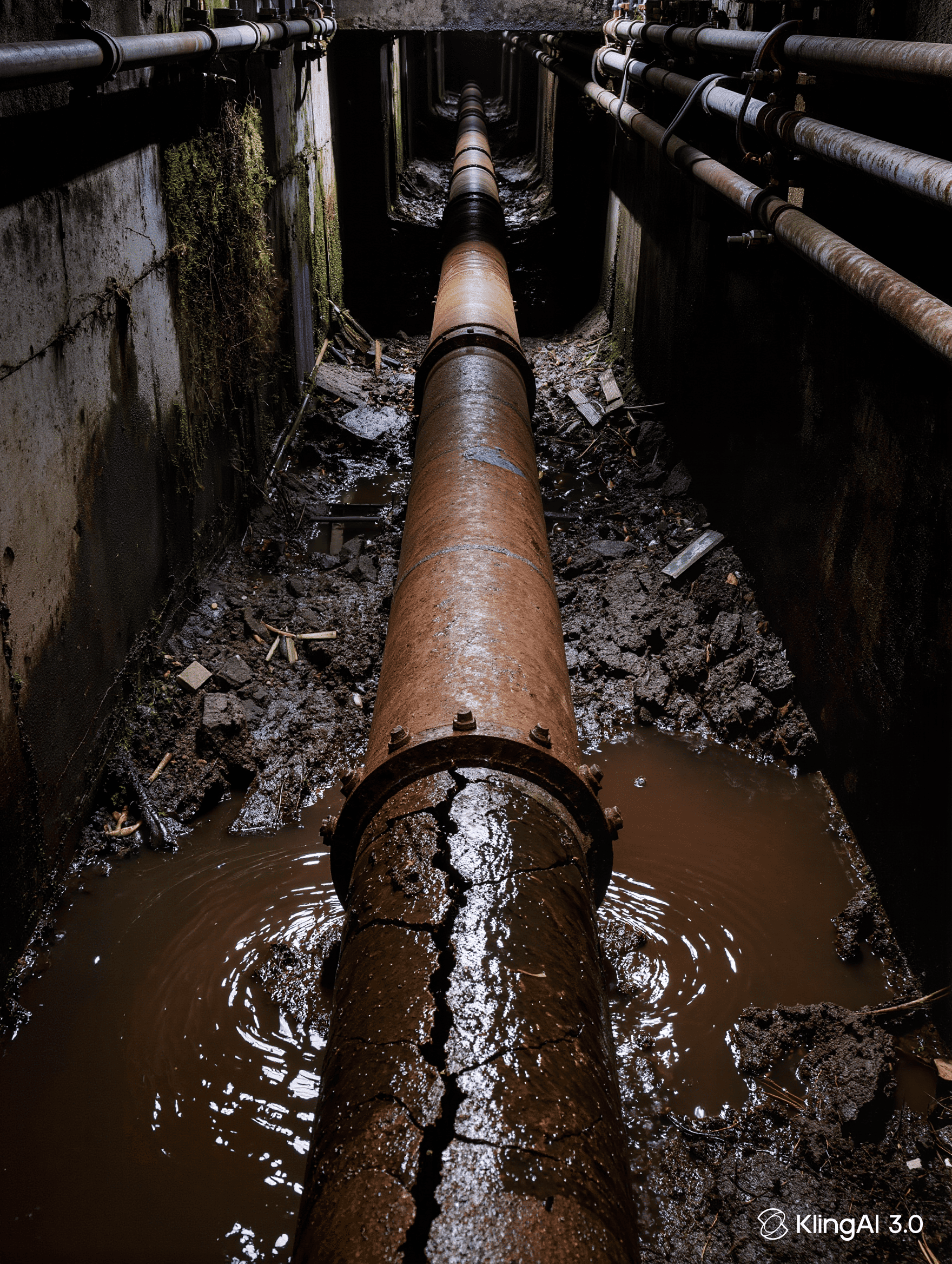
Slab Leak Detection
Acoustic sensors and thermal imaging pinpoint leaks under your foundation — no jackhammering just to find it.

Water Line Leak Detection
We locate hidden leaks in pressurized supply lines behind walls, under floors, and underground.
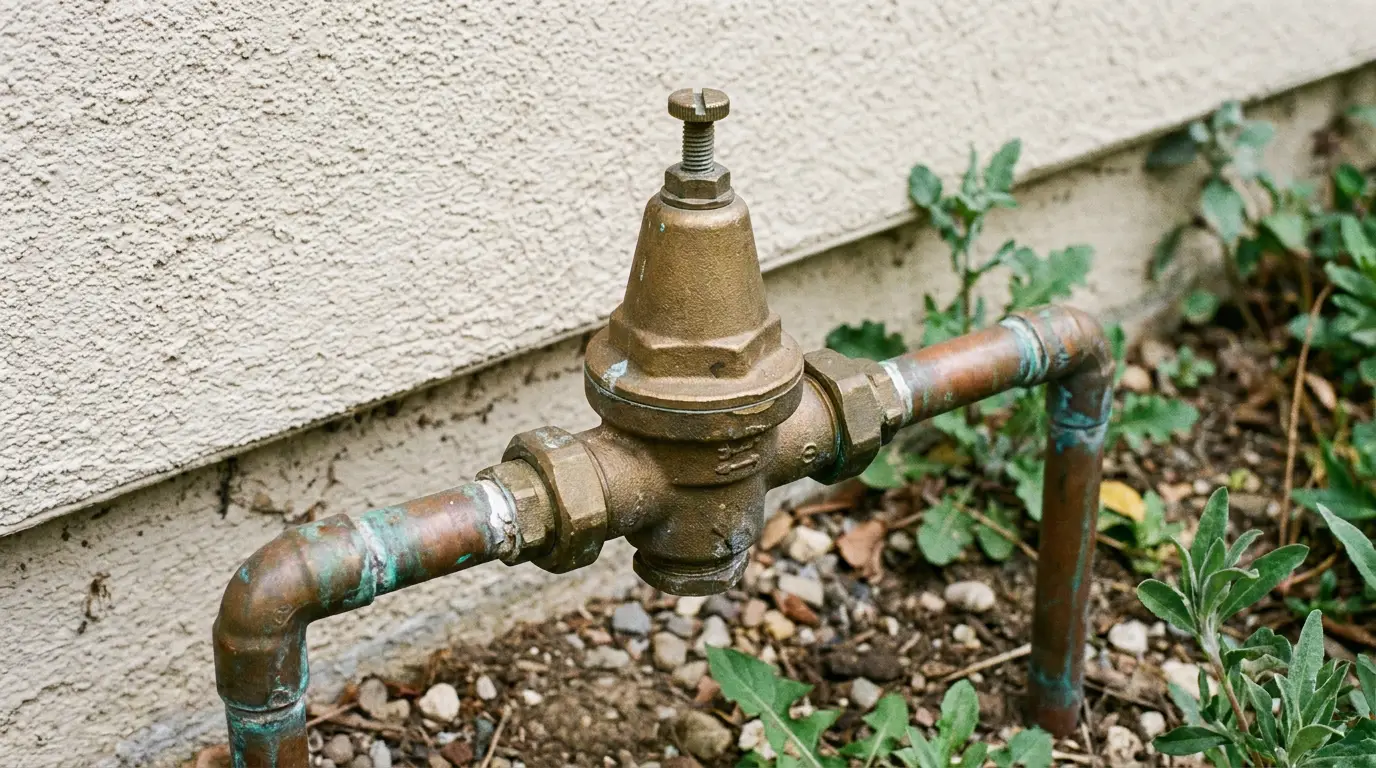
Pool & Spa Leak Detection
Losing water fast? We find exactly where your pool, spa, or equipment line is leaking.
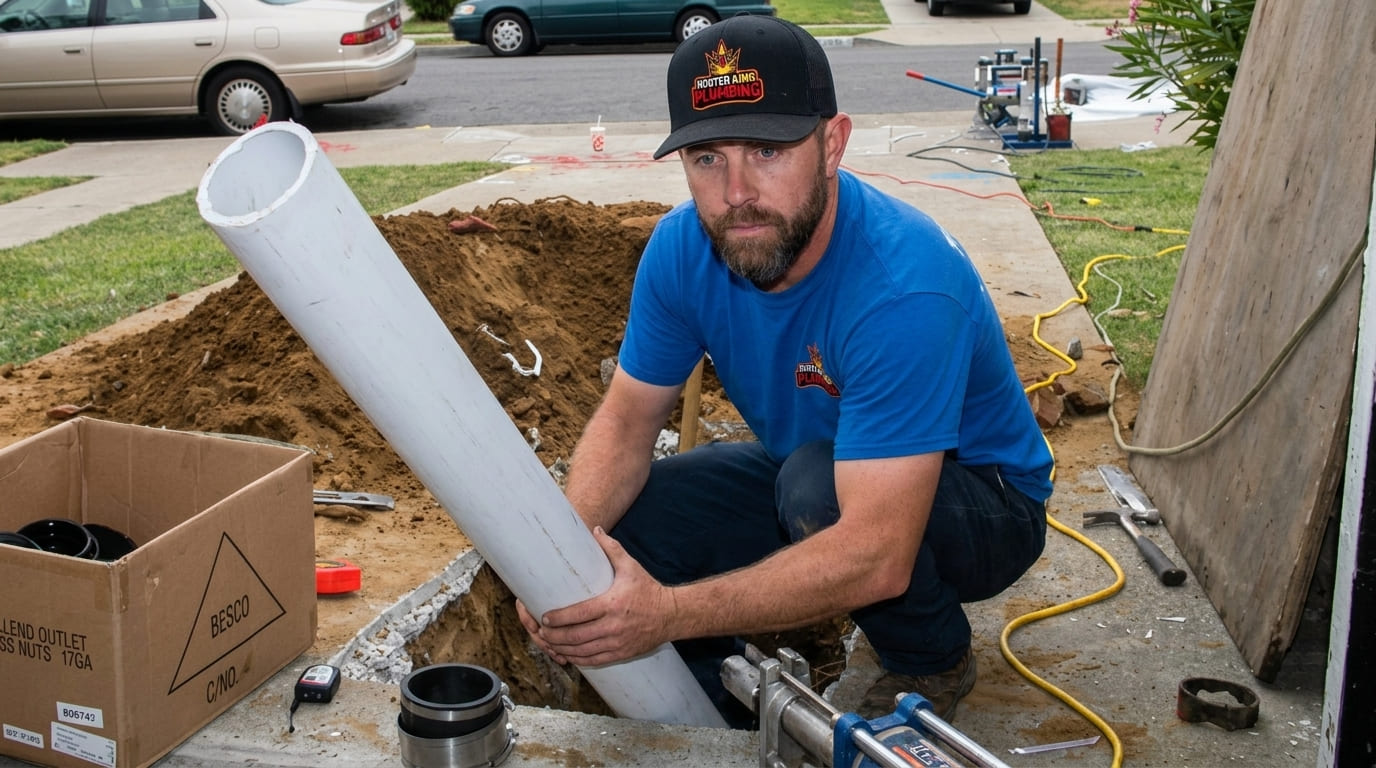
Sewer & Drain Leaks
HD camera and line location find breaks, cracks, and root intrusion in sewer and drain lines.
diagnostics – do you need this?
SIGNS YOU HAVE A HIDDEN WATER LEAK
Most hidden leaks show themselves long before a single drop appears on the floor. Here’s what to watch for.⚠
Water bill that suddenly doubled
⚠
Warm or damp spots on the floor
⚠
Mildew or musty smell in one room
⚠
Brown stains on ceilings or drywall
⚠
Hot water tank running constantly
⚠
Sound of running water — with nothing on
⚠
Low water pressure across the house
⚠
Water meter spinning with all fixtures off
⚠
Cracked tile or buckled flooring
⚠
Foundation cracks or wet exterior soil
GOT A WRITTEN ESTIMATE? FREE 2ND OPINION.
If another plumber gave you a leak-repair or slab-repipe quote, call us first. We give written second opinions on every leak job — and we’ll beat any written estimate.
COMPARE – SIDE BY SIDE
ELECTRONIC DETECTION VS OTHER METHODS
Why we use professional equipment instead of guessing where to cut.| FACTOR | ELECTRONIC DETECTION | ACOUSTIC-ONLY | CUT-AND-LOOK |
|---|---|---|---|
| Damage to your home | None non-invasive | Minimal | Significant – multiple holes |
| Accuracy | Within inches | Within a few feet | Trial & error |
| Time on site | 60-90 minutes | 1-2 hours | Half day or more |
| Works through slab/walls | Yes | Limited | N/A – destroys them |
| Slab-leak capable | Yes | Sometimes | Only by demolition |
| Insurance-grade report | Yes – written & photographed | Verbal only | No |
| Cost with Rooter King | $99 – FREE with repair | $150-250 | $500+ in damage to redo |
HEAR WATER RUNNING? DON’T WAIT.
Hidden leaks get worse fast. Call now for $99 detection — FREE when we do the repair.WHY ROOTER KING – WHY US
WHY SOCAL HOMEOWNERS CHOOSE ROOTER KING
One call. Our own crew. Our own equipment. Real plumbers — not subs.412+ FIVE-STAR REVIEWS
Family owned and reputation driven. Our work shows up under our own name — never subcontracted.
SAME-DAY SERVICE
Detect and repair in one visit on most jobs. Slab repipes typically scheduled within 24-48 hours.
$99 FLAT — FREE WITH REPAIR
No trip charge, no diagnostic upcharge. Detection is a flat $99 — and it’s credited 100% when we do the repair.
WE OWN THE EQUIPMENT
Electronic listening, acoustic amplifiers, thermal cameras, pressure testing, tracer gas. No subbing out detection.
WRITTEN DIAGNOSIS
You get photos, the exact location, the cause, and a flat-rate quote in writing — useful for insurance claims.
LICENSED · BONDED · INSURED
California CSLB #1090875. Written workmanship warranty on every repair. Manufacturer warranty on parts.
Contact Rooter King
Hear Water Running? Find The Leak Today
Non-invasive electronic leak detection pinpoints hidden leaks fast — before they wreck your floors, walls, or water bill.
Call (951) 880-3727Request a Time24/7 emergency line · CSLB #1090875 · 5.0★ on Google
Our Service Area
TESTIMONIAL OF THE MONTH
“I had a $480 water bill and no idea where the leak was. Rooter King found it in less than an hour — under the slab in the hallway. They fixed it that same afternoon and the detection fee came right off the repair invoice. Best plumber I’ve used in 20 years of owning this house.”
Maria L.
Verified Google Review – Corona, CA
Licensed, bonded and insured. CSLB #1090875.
Call (951) 880-3727Frequently Asked Questions
How do you find a hidden water leak?
We use acoustic listening equipment, thermal imaging, and pressure testing to pinpoint leaks behind walls, under slabs, and underground without unnecessary digging.
What are the signs of a slab leak?
A spike in your water bill, warm spots on the floor, the sound of running water with everything off, or cracks in flooring can all point to a slab leak.
Can you fix the leak once you find it?
Yes. We locate and repair the leak, whether it is a pinhole in a copper line, a slab leak, or an underground service line.
How accurate is your leak location?
Our electronic equipment usually locates leaks within inches, so the repair is targeted instead of opening a whole wall or floor.
WHY INLAND EMPIRE LEAKS FOLLOW A LOCAL PATTERN
Hidden leaks in Corona, Norco, Eastvale and Jurupa Valley are rarely random. Three local conditions do most of the damage, and they compound: the mineral load in the water, the pressure the system runs at, and the ground the house sits on. Which one is driving a particular leak changes where we listen first and what the right repair is.
Most of the housing stock we work on across western Riverside County is slab-on-grade, with water lines running through the attic and down inside walls, or through the concrete pad itself. That construction choice is why so many local leaks announce themselves as a warm spot on the floor, a jump in the water bill, or the sound of running water at night rather than a visible drip.
HARD WATER, SCALE AND THE PINHOLE LEAK
Water across the Inland Empire is hard. Corona, for example, supplies customers from a blend of local groundwater wells and water imported from the Metropolitan Water District of Southern California, and publishes the details in its water service and water quality information. Nearby providers draw on similar mixes, and both sources carry dissolved calcium and magnesium. Rather than quote a figure that shifts by pressure zone and year, we tell homeowners to look up the current hardness for their own address in their provider annual Consumer Confidence Report, because that is what a softener should be sized against.
Hardness matters mechanically. Minerals drop out of solution and build scale inside supply lines, most aggressively on the hot side. As that layer thickens the effective bore shrinks, velocity climbs, and turbulence at elbows and valve seats scours away the protective oxide film copper relies on. The result is erosion corrosion, and its signature is the pinhole leak: a small, high-pressure weep that soaks framing long before anyone sees water.
Scale also changes how a leak behaves while we hunt it. Deposits can partially plug a pinhole so it weeps for hours, seals, then reopens when pressure rises overnight. Homeowners describe a leak that comes and goes, and it is the most common reason a previous visit found nothing.
SCALE LOAD
Hard water leaves calcium and magnesium inside supply lines and water heaters, narrowing the bore and accelerating corrosion at fittings.
SYSTEM PRESSURE
Upper pressure zones can deliver more static pressure than fixtures are rated for, turning a marginal fitting into an active leak.
SOIL MOVEMENT
Expansive clay swells and shrinks with moisture, loading rigid pipe where it runs beneath or penetrates the slab.
PIPE AGE
Copper, galvanized steel and early plastic age differently. Knowing a tract build era narrows the search before we open a wall.
Free estimates on planned work across Riverside County.
Call (951) 880-3727WHAT MOVES UNDER AN INLAND EMPIRE SLAB
Large parts of western Riverside County sit on expansive clay. It takes on water and swells, then shrinks through the dry months, and the movement is not uniform across a building pad. That differential movement puts bending loads on anything rigid crossing the affected zone, which is exactly what copper water lines, cast iron drains and slab penetrations are.
Irrigation sharpens the cycle. A lawn zone along one side of a foundation keeps that strip wet while the rest of the pad dries, so the ground under one corner behaves differently from the opposite corner. The practical result is a seasonal pattern: slab leak calls cluster after the first sustained rains and at the end of a long dry stretch rather than spreading evenly through the year.
DETECTION METHODS
LEAK DETECTION METHODS COMPARED
Each method answers a different question. Most jobs use two or three in sequence rather than any single tool.
| Method | Best at | Where it struggles locally |
|---|---|---|
| Acoustic and ground microphone | Pressurised lines under slab, in walls and underground; pinpointing to within inches | Traffic and pool equipment noise, deep lines, stone or thick carpet over the leak |
| Thermal imaging | Hot water slab leaks and how warm water spreads through a pad | Cold lines show poorly; sun on a floor can mask or mimic a signature |
| Tracer gas | Drained or very small leaks where acoustic returns nothing | Needs the line isolated and emptied first, and a reasonably sealed system |
| Pressure isolation testing | Proving which branch is losing water and separating irrigation from interior plumbing | Confirms a leak exists and where it is not, but does not mark the spot |
| Camera and sonde locating | Drain, waste and sewer lines; producing a marked depth and position | Not applicable to pressurised supply lines, which are too small for a drain camera |
| Moisture mapping | Tracing how far water has travelled through flooring and framing | Shows the damage footprint, not the source; water migrates well away from the leak |
THE METER TEST YOU CAN RUN BEFORE WE ARRIVE
Turn off every fixture and appliance that uses water, including the ice maker, and confirm no irrigation zone is scheduled. Find the meter in the box near the kerb and look for the small low-flow indicator, usually a triangle or dial that turns at very low flow. If it moves with everything off, water is going somewhere it should not. Note the reading, wait twenty to thirty minutes, and read again.
Talk it through with a licensed Rooter King plumber.
Call (951) 880-3727To separate house from yard, close the main shutoff at the building and repeat. If the meter still moves, the loss is on the service line or irrigation between meter and valve. If it stops, the leak is inside the building envelope. That single distinction reshapes the whole approach, and it is why we ask homeowners not to open walls or break concrete before the leak has actually been located.
WHEN A LEAK BECOMES A REPIPE DECISION
One pinhole in an otherwise sound copper system is a repair. A second and third on the same hot line within a year or two is a pattern, because erosion corrosion does not confine itself to the section that failed first. In that case we walk through the honest comparison between spot repairs, rerouting the worst run, and a full repipe. Where the failure is underground instead, pipe repair and replacement covers the water and sewer options outside the footprint.
LEAK DETECTION QUESTIONS FROM INLAND EMPIRE HOMEOWNERS
Does hard water actually cause leaks?
Indirectly, yes. The dissolved calcium and magnesium that spots your glassware builds scale inside supply lines and water heaters. That layer narrows the pipe, raises velocity, and strips the protective film off copper at elbows, which is the classic setup for pinhole leaks. Hard water does not drill the hole, but over years it creates the conditions.
Why does my leak seem to come and go?
Mineral scale can partially plug a small pinhole, so it weeps, seals, then reopens when pressure rises overnight. Intermittent leaks are common in hard water areas and are the usual reason an earlier visit found nothing. We isolate the suspect branch and monitor it under pressure over time instead of relying on one listening pass.
Do you have to break concrete to find a slab leak?
No. Locating and repairing are separate steps. We pinpoint the leak with acoustic equipment, thermal imaging, tracer gas or pressure isolation and mark the spot on the floor. Only then does anyone decide between opening that one spot, rerouting the line overhead, or replacing the run.
Why do slab leaks here cluster after the rain?
Much of western Riverside County sits on expansive clay, which swells as it takes on water and shrinks as it dries. That movement is uneven across a pad, and the differential loading stresses rigid copper and cast iron running under the slab. A long dry spell followed by sustained rain is the sharpest version of that cycle.
Can I check for a leak myself first?
Yes, and it helps. Shut off every water-using fixture and appliance, confirm no irrigation is running, then watch the low-flow indicator on your meter. If it moves, note the reading and check again in twenty to thirty minutes. Then close the main shutoff at the house and repeat to separate interior plumbing from the yard.
Who issues the permit if this becomes a pipe replacement?
It depends on the address. Inside an incorporated city such as Corona, Norco, Riverside, Eastvale or Jurupa Valley, the permit comes from that city building department. On unincorporated county land it comes from Riverside County. Work crossing the sidewalk or street to reach the main normally needs a separate encroachment permit from whichever agency maintains that road.