 Skip to content
 GOOGLE REVIEWS

Quick answer: From a single pinhole leak to a whole-home repipe, Rooter King repairs and replaces copper, PEX, galvanized, and cast-iron pipe across Riverside County. Trenchless pipe bursting and lining let us replace failing water and sewer lines without digging up your yard, and every repipe is licensed, permitted, warrantied, and left with the walls patched.
Call (951) 880-3727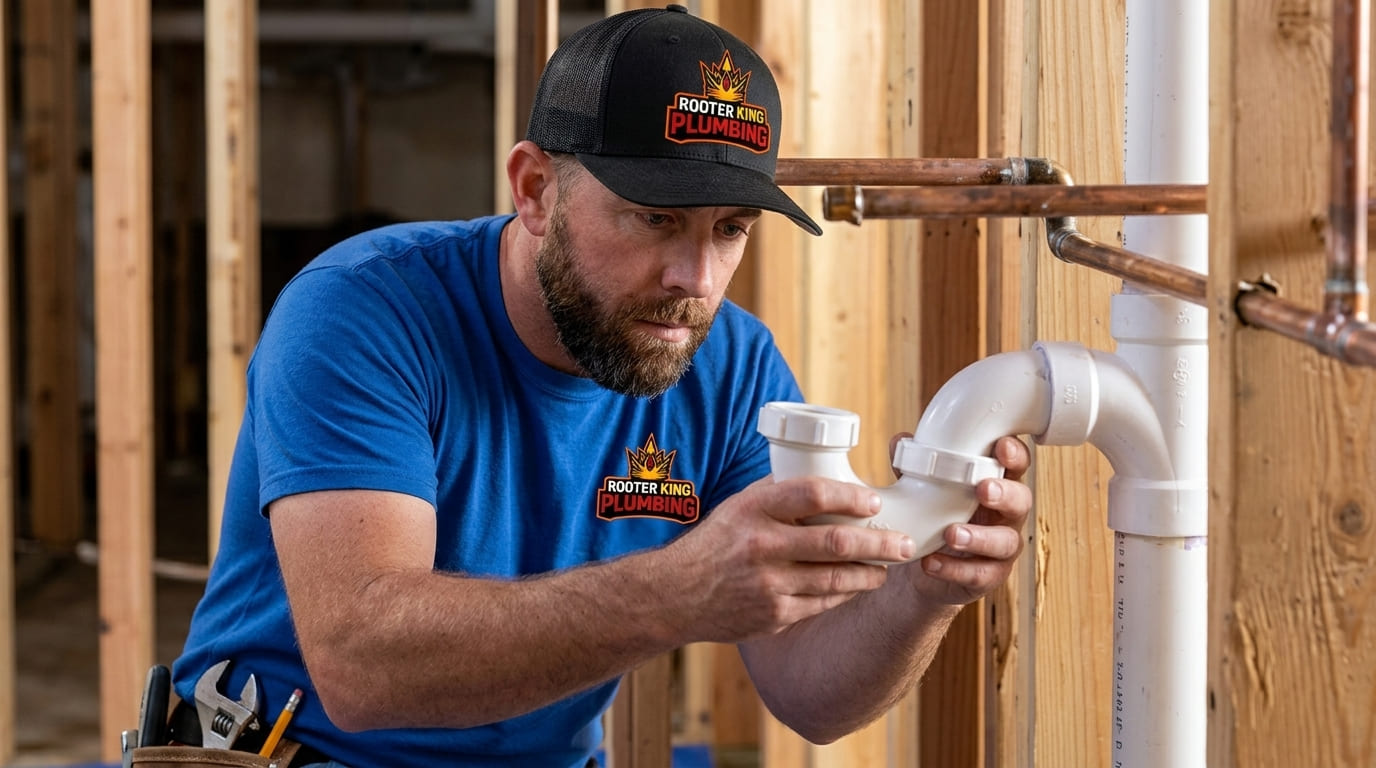
Pipe Repair in Riverside County, CA
SO-CAL’S TRUSTED LOCAL PLUMBER • 5.0★ GOOGLETrusted Pipe Repair & Repiping in Riverside County
When a pipe goes, the question is rarely “can it be patched” — it is “what is the rest of the line going to do in the next twelve months.” We give you the honest read. Sometimes a single coupling and twenty minutes is the right call. Other times, especially with 50-year-old galvanized supply lines, patching just moves the leak six feet down. We will show you the section we are looking at and let you decide.
Need New Pipes?
Same day on most repairs — slab leaks, pinholes, ABS sewer cracks, broken cleanouts. Larger jobs (a full repipe, a sewer reroute, trenchless work) get scheduled out, with a written quote that does not change once the work starts.
$69 DRAIN CLEANING SPECIAL
100+ HAPPY CUSTOMERS WEEKLY
10+ CLIENTS DAILY
Signs Your Home Needs Pipe Repair or a Complete Repipe
When homeowners turn to Google for help, they are usually searching for things like “Why is my water brown?” or “How do I know if my pipes are bad?” Pipes generally do not fail overnight without giving you a few warning signs first. Knowing how to read these signals can be the difference between scheduling a controlled, affordable repair and waking up to a catastrophic, flooded living room.
If you live in an older neighborhood, your home might still have its original galvanized steel or aging copper plumbing. Here are the most common red flags that indicate your pipes are crying out for professional help:
Foul-Smelling Water: If your water smells metallic or slightly like sulfur, it can indicate bacterial buildup in old, decaying pipes. The Environmental Protection Agency (EPA) provides excellent resources on understanding home water quality, but foul odors are almost always a sign that your infrastructure needs an upgrade.
Discolored or Rusty Water: If you turn on your faucet after it hasn’t been used for a few hours and the water sputters out looking brown, yellow, or orange, your pipes are rusting from the inside out. This is a classic symptom of failing galvanized steel pipes. The rust compromises the integrity of the pipe and poses water quality concerns.
Frequent, Reoccurring Leaks: A single leak under the sink is usually an isolated incident. However, if you have had to call a plumber three times in the last year to patch different pinhole leaks around the house, your plumbing system has reached the end of its lifespan. Putting a band-aid on a failing system is just throwing good money after bad.
A Sudden Drop in Water Pressure: If taking a shower feels like standing under a weak trickle, your pipes might be heavily restricted. As galvanized pipes rust and as hard water scale builds up inside copper pipes, the inner diameter of the pipe shrinks dramatically. Eventually, water simply cannot force its way through the buildup.
Flaking or Dimpled Exposed Pipes: Take a look at the exposed pipes near your water heater or in your basement/crawlspace. If you see white, crusty buildup (corrosion), green oxidation (patina) on copper, or actual flaking rust, the metal is actively degrading and is at a high risk of rupturing.
Pipe Repair and Replacement Services We Offer
Complete Pipe Repair
Slab leaks, pinhole leaks, and cracked lines repaired fast — we find the break and fix it with minimal disruption.
Whole-Home Repiping
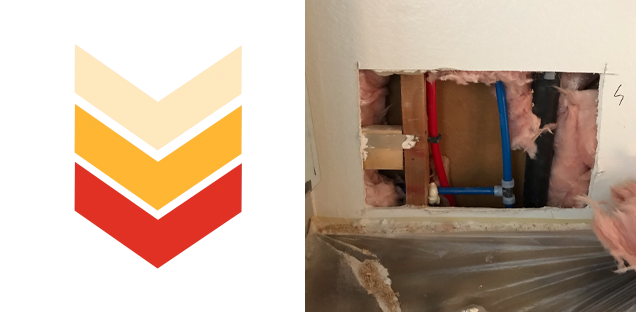
Old galvanized or failing copper? We replace your whole system with durable PEX or copper — permitted and warrantied.
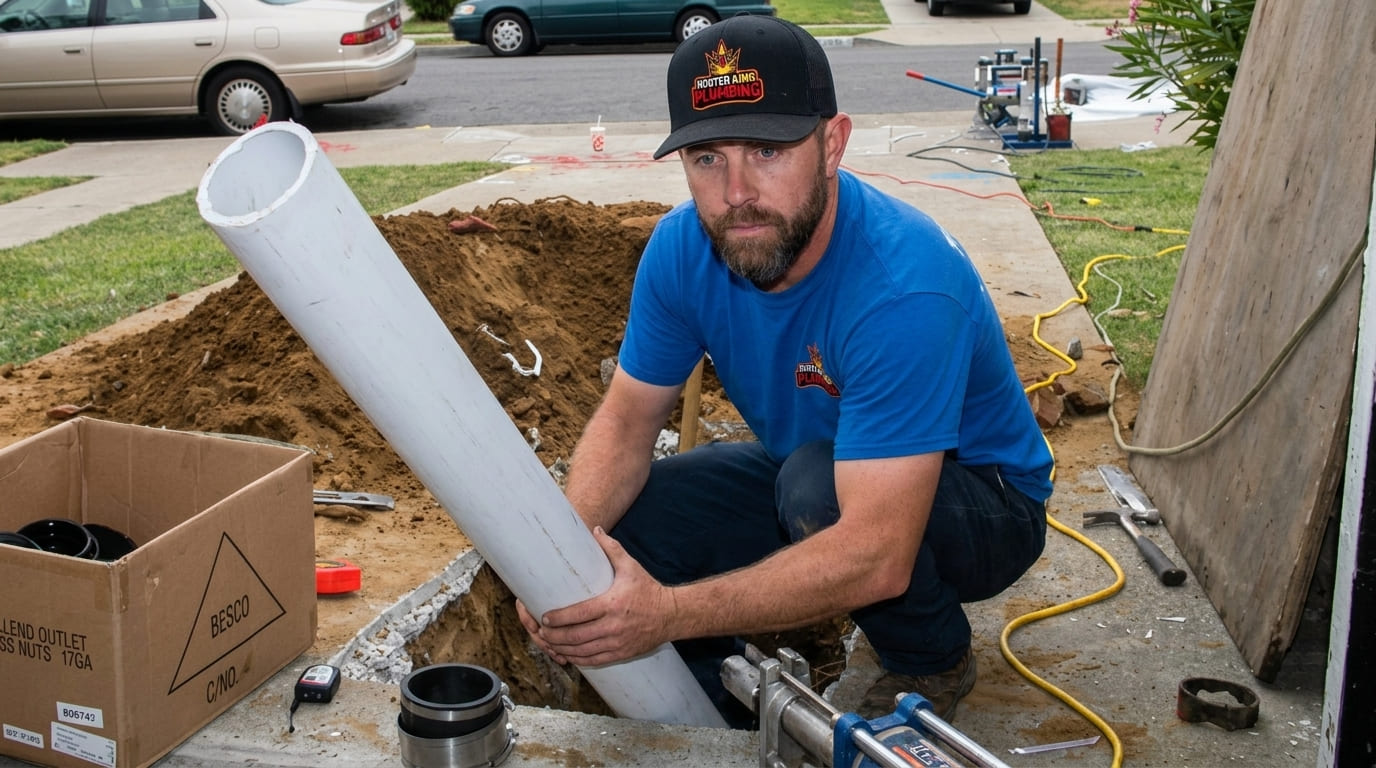
Trenchless Sewer Repair
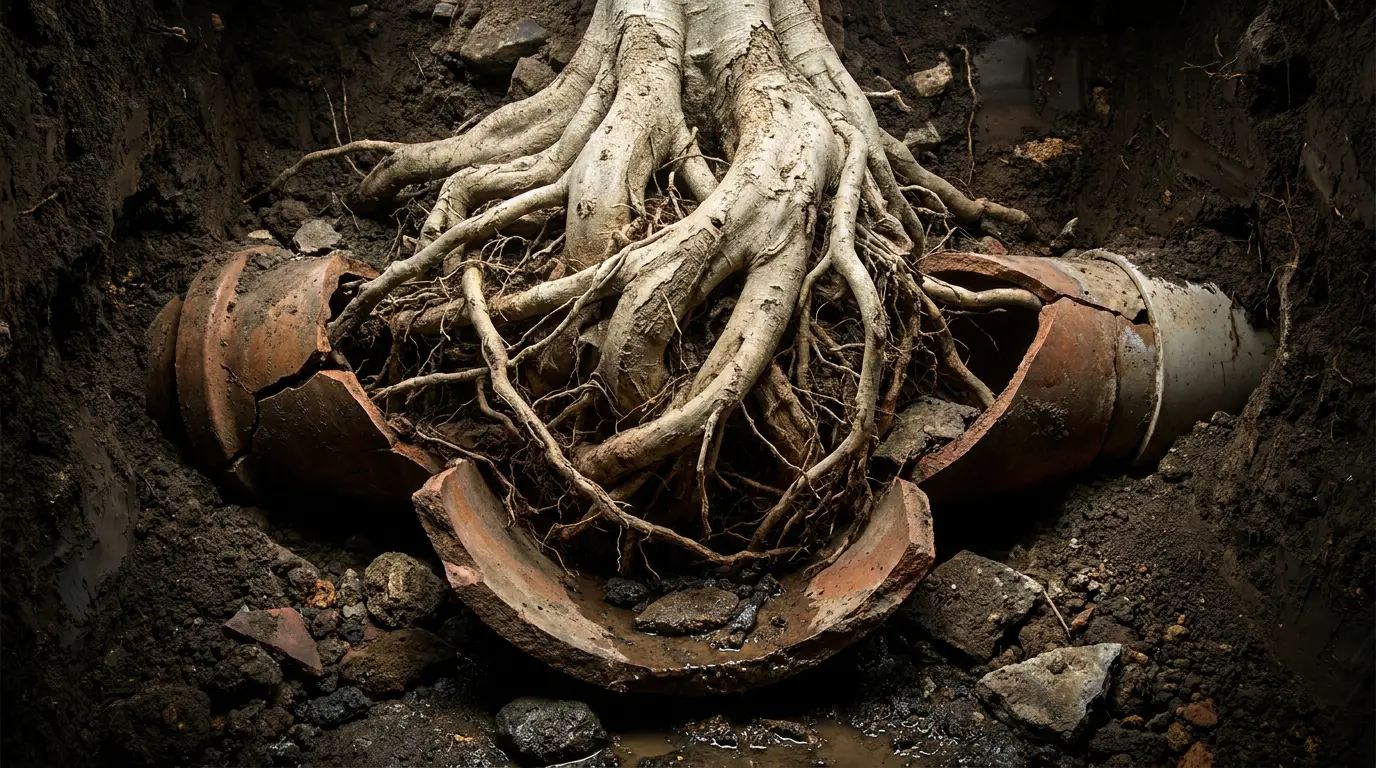
Replace or reline a broken sewer pipe without tearing up your yard, using pipe bursting and CIPP lining.
Repair or replace?
Should You Repair or Repipe?
A single leak is a repair. A pattern of them usually means it’s time to replace. Here’s how we call it.
| What’s happening | Usual fix |
|---|---|
| One pinhole or slab leak | Targeted spot repair |
| Leaks in several spots | Whole-home repipe |
| Low pressure throughout the house | Repipe corroded lines |
| Rusty or discolored water | Replace galvanized pipe |
| Broken or root-filled sewer line | Trenchless repair |
NEED PLUMBING SERVICES? CONTACT US TODAY!
Testimonial Of The Month
5-Star Service = 5-Star Reviews
The Hidden Costs of Delaying Pipe Repairs
One of the most common and understandable instincts a homeowner has is to ignore a small plumbing issue. A slightly damp spot on the ceiling or a minor drip under the bathroom sink is easy to dismiss when you are busy. However, delaying pipe repairs is almost always a financially devastating mistake. Water is relentless, and it never stops working to degrade the structural integrity of your home.
The most immediate and severe consequence of a delayed pipe repair is the rapid growth of toxic mold. According to the Centers for Disease Control and Prevention (CDC), mold spores are naturally present in the air, but they require a warm, damp environment to multiply. When a pipe has a slow, hidden leak inside a dark wall cavity, it creates the absolute perfect breeding ground. Toxic mold can begin actively growing and spreading across your drywall and wooden studs within just 24 to 48 hours. If you ignore a leak for a month, a $300 pipe repair easily turns into a $5,000 hazardous materials mold remediation project.
Also water absolutely destroys building materials. Hardwood floors will act like a sponge, absorbing the moisture until the planks cup, warp, and snap, requiring a complete, expensive replacement. Drywall will lose all structural integrity and turn to mush. If the leak is under your concrete slab, it will slowly wash away the supporting dirt, creating underground voids that can cause your foundation to crack and sink. The golden rule of plumbing is simple: the longer you wait to fix a bad pipe, the more exponentially expensive the final restoration bill will be. Calling Rooter King at the first sign of trouble is the cheapest insurance policy you can buy for your home.
Schedule Pipe Repair Now!

Modern Piping Materials: PEX vs. Copper
When homeowners in Corona, Jurupa Valley, or Riverside decide to invest in a whole-home repipe, one of the most frequently asked Google searches is, “What is the best material for repiping a house?” Today, the industry standard has narrowed down to two primary contenders: traditional Copper and modern PEX (Cross-linked Polyethylene). Both are excellent materials, but they have distinct differences that fit different homes and budgets.
The Traditional Standard: Copper Piping For over half a century, rigid copper piping was the absolute gold standard in American plumbing. It is incredibly durable, naturally resists bacterial growth, and handles extreme heat exceptionally well. When installed correctly, a copper plumbing system can easily last 50 to 70 years. Also copper is highly valued in the real estate market; buyers love seeing gleaming copper pipes in a utility room.
However, copper has its drawbacks. First, the material itself is very expensive, and because it is rigid, it requires a massive amount of labor to cut, fit, and meticulously solder every single joint with an open torch inside your walls. More importantly for Southern California residents, copper is highly susceptible to the hard water minerals prevalent in the Inland Empire, which can cause microscopic pinhole leaks over time.
The Modern Marvel: PEX Tubing PEX has rapidly become the dominant material for residential repiping, and for excellent reasons. PEX is a highly durable, flexible plastic tubing. Its flexibility is its greatest superpower. Plumbers can smoothly snake long, continuous runs of PEX through walls, around corners, and over ceiling joists without needing to cut the drywall to install elbow joints. Fewer joints in a plumbing system mean drastically fewer places for potential leaks to occur.
For Riverside County, PEX is particularly brilliant because its flexibility allows it to easily expand, contract, and subtly shift with our local seismic micro-tremors without snapping. PEX is completely immune to hard water scale buildup and will never rust or corrode. Finally, because the material is cheaper and the installation is significantly faster than copper, a PEX repipe is generally much more affordable for the average homeowner. Our Rooter King technicians are highly certified in both materials and will gladly help you choose the perfect option for your specific home architecture and budget.
Contact Rooter King
Leaking or Failing Pipes? Call Today
From a single slab leak to a whole-home repipe, we fix it right — licensed, warrantied, and with minimal disruption.
Call (951) 880-3727Book Online24/7 emergency line · CSLB #1090875 · 5.0★ on Google
Our Service Area
Frequently Asked Questions
Can you repair a pipe without replacing the whole line?
Often yes. For isolated leaks we make spot repairs. For corroded or repeatedly failing lines we recommend replacement so you are not paying for the same leak twice.
What pipe materials do you work with?
Copper, PEX, ABS, PVC, and galvanized. We will tell you which makes sense for your home and budget.
How do you find a hidden pipe leak?
We use leak detection equipment and cameras to locate the leak precisely, so we open only what is needed.
Do you offer whole-home repiping?
Yes. If your home has aging galvanized or repeatedly failing pipes, a whole-home repipe with PEX or copper is often the long-term fix.