 Skip to content
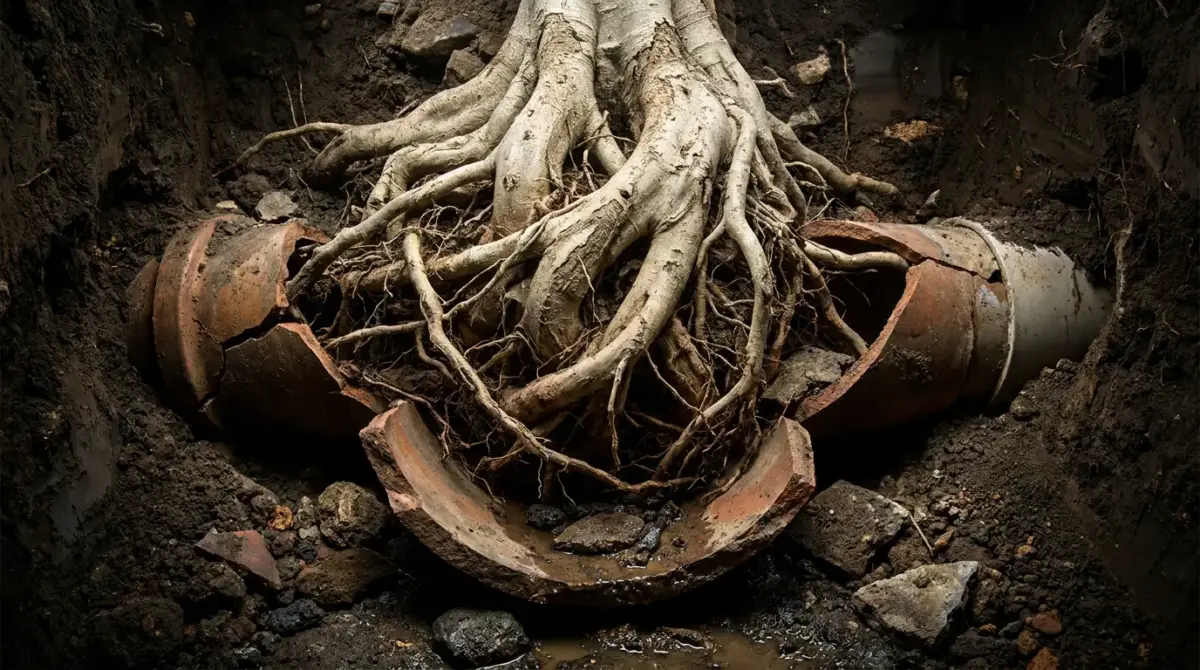
Tree roots and sewer lines have a long, ugly relationship. The pipe is filled with water and nutrients. The roots want both. Given a tiny crack to slip through, they will, and once they’re in, they grow.
By the time most homeowners notice, the roots have been inside the pipe for months or years. Here’s how to catch it earlier.
How Roots Get Into a Sewer Line
Sewer pipes don’t have to be broken for roots to find them. The connection joints between sections are usually enough. Old clay tile pipes are especially vulnerable because the joints rely on rubber gaskets or simple compression seals.
Roots find moisture leaking out of those joints (even microscopic seepage), grow toward it, and eventually slip a single hair-thin tendril into the pipe. Once inside, they fan out into root masses that catch toilet paper, grease, and waste.
The pipe doesn’t have to fail for the line to fail.
6 Warning Signs You Have Roots in Your Line
1. Slow Drains in Multiple Fixtures
One slow drain? Probably a local clog. Multiple drains slow at the same time? That points to the main sewer line. Roots are a classic cause when the slow-down comes on gradually over weeks or months.
2. Gurgling Toilets
You flush a toilet and another drain bubbles or gurgles. That’s air trying to find a way around an obstruction in the main line. Roots create exactly this kind of partial blockage.
3. Sewage Smell in the Yard
If you start catching whiffs of sewer near the line’s path in your yard, especially after running water or doing laundry, the pipe is leaking. Roots usually got in where the leak is.
4. Patches of Lawn That Are Suddenly Greener
Counterintuitive, but real. A leaking sewer line fertilizes the soil above it. If a strip of your lawn is mysteriously lusher and greener than the rest, that’s often the route of your sewer line, with a leak feeding the surrounding roots.
5. Frequent Clogs Despite Snaking
If you’ve had the line snaked two or three times in the past year and you’re already due for another, roots are a top suspect. Snaking cuts through the root ball temporarily. The roots grow back, often within months.
6. Sinkholes or Dips in the Yard
Worst case. A long-term leak from a root-damaged sewer line slowly washes soil away under the surface. Eventually the ground above gives, creating a sinkhole or a soft depression. If you notice this, you don’t have time to wait.
Which Trees Cause the Most Sewer Damage?
Aggressive-root species are the usual culprits. The Arbor Day Foundation tree-selection guide highlights species with shallow, fast-spreading roots that don’t play nicely with utility lines. In SoCal, the common offenders include:
- Sycamore
- Eucalyptus
- Willow
- Pepper tree
- Mulberry
- Ficus
- Pine (some varieties)
If you have any of these within 50 feet of your sewer line, plan on the line eventually meeting the roots.
How a Professional Diagnoses Roots
Camera inspection. Period.
A small high-resolution camera goes down the line from the cleanout. The plumber watches a live feed and records video showing exactly where the roots are, how bad the intrusion is, and what shape the pipe is in. No guessing. No exploratory digging.
Treatment Options Once Roots Are Confirmed
Three real options, ranging from quick fix to permanent solution.
Hydro jetting with root cutter. High-pressure water plus a mechanical root-cutting head clears the existing root mass and scours the pipe. This is the temporary fix, good for 6-24 months, until the roots regrow.
Foam root inhibitor. After clearing, a foaming herbicide gets flushed through the line. The foam contacts the cut roots at the entry points and kills the growing tips back to the soil. Buys you another 12-18 months of growing time before treatment is needed again. The EPA-registered pesticide labels spell out approved products and application requirements.
Trenchless pipe lining or replacement. The permanent fix. A new pipe (or pipe liner) goes inside the old one, sealing all the joints roots could re-enter. Done right, roots cannot get back in. Lifespan: 50+ years.
Why Snaking Alone Is a Losing Strategy
A snake (auger) can cut a hole through a root ball. It does not clean the pipe. It does not kill the roots. It does not seal the entry point. Within months, the roots regrow into the open space.
Plumbers love snaking root-damaged lines because it’s an easy repeat customer. Honest plumbers tell you snaking is a Band-Aid and walk you through the real options.
Prevention
- Don’t plant aggressive-root trees near the sewer line
- If you already have problem trees, have the line scoped every 2 to 3 years
- Don’t pour grease down kitchen drains (it traps debris around any existing roots)
- Keep an eye on your water bill and lawn for the early signs
Bottom Line
Roots in a sewer line don’t fix themselves. They get worse. Catch it early with a camera scope, clear it with hydro jetting, and decide whether to manage it long-term with foam treatments or solve it permanently with trenchless replacement. The longer you wait, the more expensive the fix.
Trusted Local Network
Plumbing diagnostics that intersect with insurance claims need careful documentation. Professional public insurance adjuster services handle policyholder advocacy on damage claims. And for restoration after major plumbing-related damage, water-damage restoration and cleanup services cover the recovery work.
Your Riverside Sewer Line Specialists
Think you might have roots in your sewer line? Don’t guess. Rooter King Plumbing serves Riverside, Corona, Jurupa Valley, and Orange County with camera inspection and same-day drain cleaning and repair including root cutter hydro jetting. Contact us to get a scope before the next backup.