 Skip to content

“You should really get a camera inspection on that line.” Every plumber says it. Every homeowner wonders what it actually involves and whether it’s worth the money.
Short answer: yes, when you have a reason to do it. A camera inspection is one of the best diagnostic tools in plumbing. It removes guesswork. It can save you thousands by catching the right problem (or ruling out the wrong one) before any expensive repair gets started.
Here’s what actually happens during one.
What a Sewer Camera Inspection Is
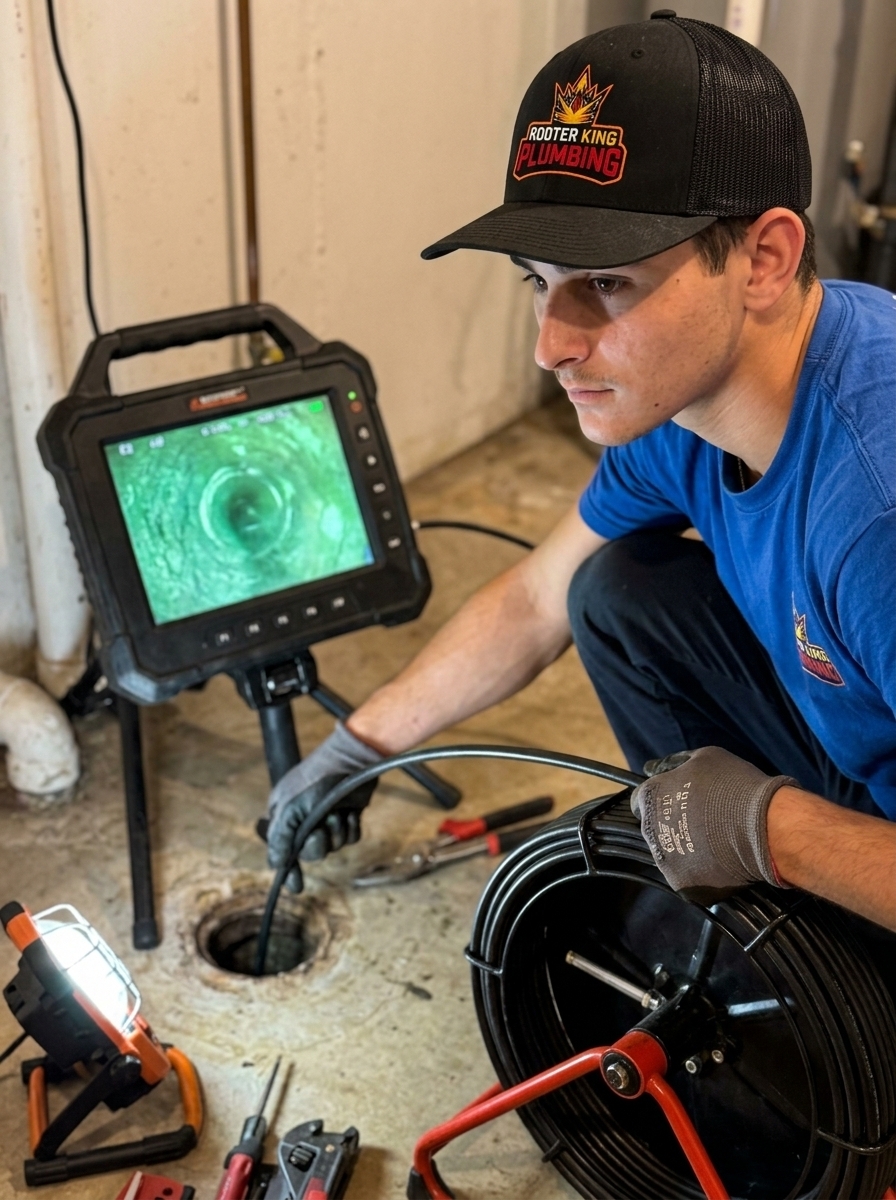
A small high-resolution waterproof camera mounted on the end of a long flexible cable. The plumber feeds the camera down your sewer line from an access point (usually the cleanout outside the house). A live video feed shows what’s happening inside the pipe in real time.
The camera typically has a built-in transmitter (called a sonde) that lets the plumber locate where the camera is from above ground. So when the camera spots a problem, you also know exactly where to dig if repairs are needed.
When You Actually Need One
The right times to scope your line:
- You’ve had two or more sewer backups in the past year
- You’re buying a home (especially anything 20+ years old)
- Mature trees grow within 50 feet of your sewer line
- You hear gurgling drains across multiple fixtures
- You’ve noticed lush green patches in your lawn over the sewer line route
- The line keeps backing up despite repeated snaking
- You’re planning a major bathroom or kitchen remodel
- You’re about to commit to expensive trenchless or excavation work
What an Inspection Looks Like Step by Step
What to expect on the day:
- Walk-through. The plumber asks about symptoms (slow drains, backups, smells) and locates your cleanout. If you don’t have one, they may use a fixture connection.
- Cable setup. The camera cable is unwound. Typical residential cables run 75 to 100 feet, easily reaching the city tap.
- Live feed. The camera goes down the line. You can watch the feed on the plumber’s screen. They narrate what they’re seeing as they go.
- Locating. When the camera finds a problem, the plumber switches to a handheld locator above ground to find the spot. They mark it with paint or a flag.
- Recording. The full run is typically recorded. You get a copy of the video.
- Report. The plumber gives a verbal summary right there, plus a written report if you need one for insurance or real estate purposes.
Total time on site: usually 45 minutes to 90 minutes.
What the Camera Catches
The big stuff:
- Tree root intrusion (and exactly which joint the roots came in through)
- Pipe corrosion, cracks, or collapses
- Bellied pipe (a low spot where waste collects)
- Offset joints from ground settling
- Grease, scale, or sediment buildup
- Foreign objects (toys, kid’s experiments, you’d be surprised)
- Improper connections from past DIY repairs
- Pipe material identification (clay, cast iron, PVC, ABS)
The video documents everything. No guessing, no “we think it might be…”, just visual confirmation of what’s happening underground.
Why It Matters Before You Buy a Home
This one’s important. A standard home inspection does not include the sewer line. Most home inspectors run water down a drain to make sure it flows, and that’s it. A camera scope is a separate inspection, often costing $200 to $450, that can reveal a $15,000 sewer replacement problem hiding under your dream home.
Per the HUD home-buying resources, sewer condition is one of the most commonly missed issues in residential inspections, and it’s one of the most expensive to fix after closing. For a few hundred bucks pre-purchase, you avoid potentially massive post-purchase surprises.
Cost
Typical SoCal pricing in 2026:
- Standalone sewer camera inspection: $200 to $450
- Bundled with a drain clearing service: often free or discounted (since the plumber’s already there)
- Camera + locate + written report: $350 to $550
- Real estate inspection report with full video and analysis: $400 to $700
Plumbers offering “free” camera inspections usually bundle it with a service call. That’s fine and often a good deal, but make sure you get to see the actual footage, not just hear about it.
What a Camera Inspection Won’t Do
Set realistic expectations. A scope shows you what’s inside the pipe. It doesn’t:
- Check the structural condition of pipes you can’t see from inside (the outside surface)
- Find leaks unless they’re severe enough to show fluid loss
- Test water pressure or supply lines (camera is for sewer/drain, not supply)
- Predict exactly when something will fail (a cracked pipe might last 5 days or 5 years)
For supply-line problems, electronic leak detection is the right tool. Different gear for different jobs.
Bottom Line
A sewer camera inspection turns guessing into knowing. It costs a few hundred dollars and prevents thousands in misdirected repairs. Worth every penny when you’ve had backups, before you buy a home, or before any major plumbing investment.
Trusted Local Network
Sink and faucet work often pairs with cabinet and remodel trades. For related needs, we recommend renovation services for permitted residential projects.
Your Riverside Camera Inspection Specialists
Need eyes on your sewer line before you spend money on guesswork? Rooter King Plumbing serves Riverside, Corona, Jurupa Valley, and Orange County with high-resolution sewer camera inspections and locating. Full video provided, written report on request, real-estate inspections welcome. Contact us to schedule.