 Skip to content

Quick answer: From a single pinhole leak to a whole-home repipe, Rooter King repairs and replaces copper, PEX, galvanized, and cast-iron pipe across Riverside County. Trenchless pipe bursting and lining let us replace failing water and sewer lines without digging up your yard, and every repipe is licensed, permitted, warrantied, and left with the walls patched.
Call (951) 880-3727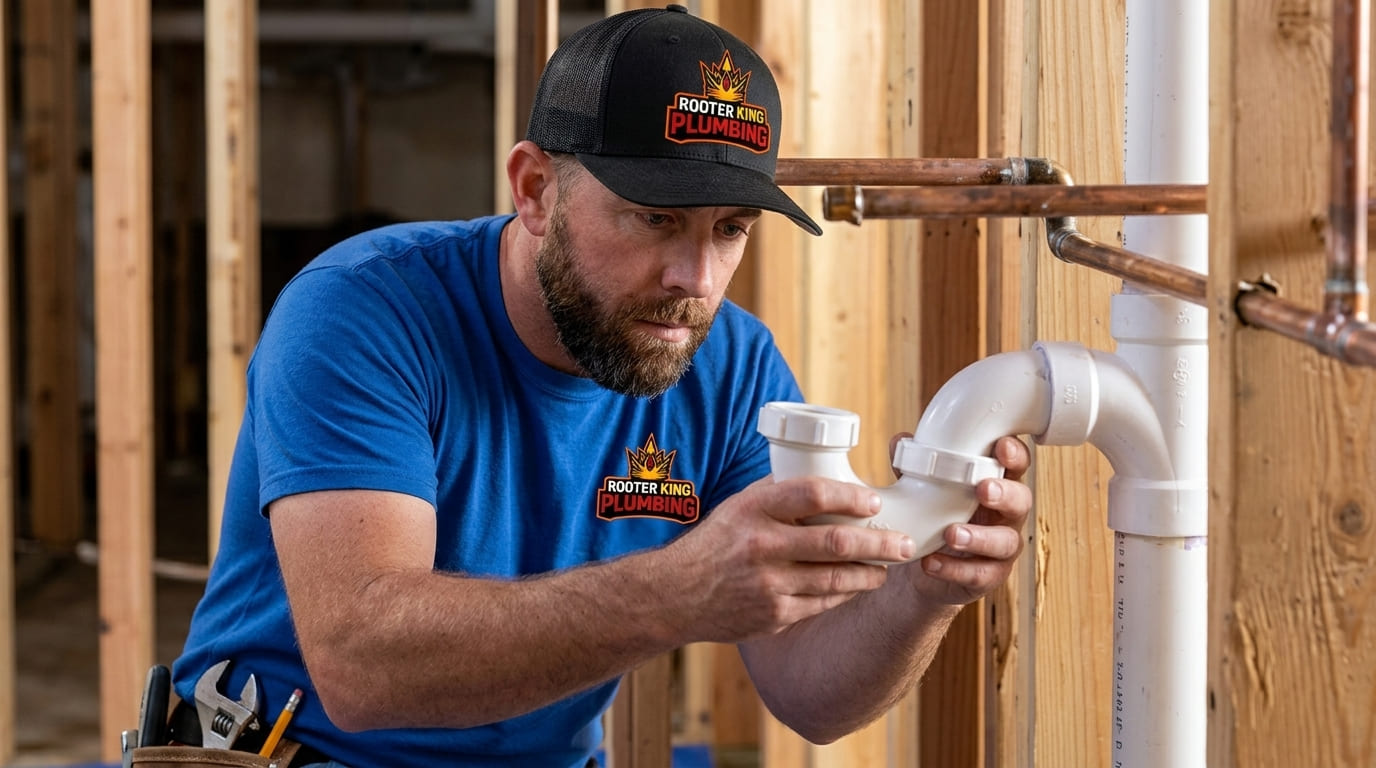
Pipe Repair in Riverside County, CA
SO-CAL’S TRUSTED LOCAL PLUMBER • 5.0★ GOOGLETrusted Pipe Repair & Repiping in Riverside County
When a pipe goes, the question is rarely “can it be patched” — it is “what is the rest of the line going to do in the next twelve months.” We give you the honest read. Sometimes a single coupling and twenty minutes is the right call. Other times, especially with 50-year-old galvanized supply lines, patching just moves the leak six feet down. We will show you the section we are looking at and let you decide.
Need New Pipes?
Same day on most repairs — slab leaks, pinholes, ABS sewer cracks, broken cleanouts. Larger jobs (a full repipe, a sewer reroute, trenchless work) get scheduled out, with a written quote that does not change once the work starts.
$73 DRAIN CLEANING SPECIAL
100+ HAPPY CUSTOMERS WEEKLY
10+ CLIENTS DAILY
Signs Your Home Needs Pipe Repair or a Complete Repipe
When homeowners turn to Google for help, they are usually searching for things like “Why is my water brown?” or “How do I know if my pipes are bad?” Pipes generally do not fail overnight without giving you a few warning signs first. Knowing how to read these signals can be the difference between scheduling a controlled, affordable repair and waking up to a catastrophic, flooded living room.
If you live in an older neighborhood, your home might still have its original galvanized steel or aging copper plumbing. Here are the most common red flags that indicate your pipes are crying out for professional help:
Foul-Smelling Water: If your water smells metallic or slightly like sulfur, it can indicate bacterial buildup in old, decaying pipes. The Environmental Protection Agency (EPA) provides excellent resources on understanding home water quality, but foul odors are almost always a sign that your infrastructure needs an upgrade.
Discolored or Rusty Water: If you turn on your faucet after it hasn’t been used for a few hours and the water sputters out looking brown, yellow, or orange, your pipes are rusting from the inside out. This is a classic symptom of failing galvanized steel pipes. The rust compromises the integrity of the pipe and poses water quality concerns.
Frequent, Reoccurring Leaks: A single leak under the sink is usually an isolated incident. However, if you have had to call a plumber three times in the last year to patch different pinhole leaks around the house, your plumbing system has reached the end of its lifespan. Putting a band-aid on a failing system is just throwing good money after bad.
A Sudden Drop in Water Pressure: If taking a shower feels like standing under a weak trickle, your pipes might be heavily restricted. As galvanized pipes rust and as hard water scale builds up inside copper pipes, the inner diameter of the pipe shrinks dramatically. Eventually, water simply cannot force its way through the buildup.
Flaking or Dimpled Exposed Pipes: Take a look at the exposed pipes near your water heater or in your basement/crawlspace. If you see white, crusty buildup (corrosion), green oxidation (patina) on copper, or actual flaking rust, the metal is actively degrading and is at a high risk of rupturing.
Pipe Repair and Replacement Services We Offer
Complete Pipe Repair
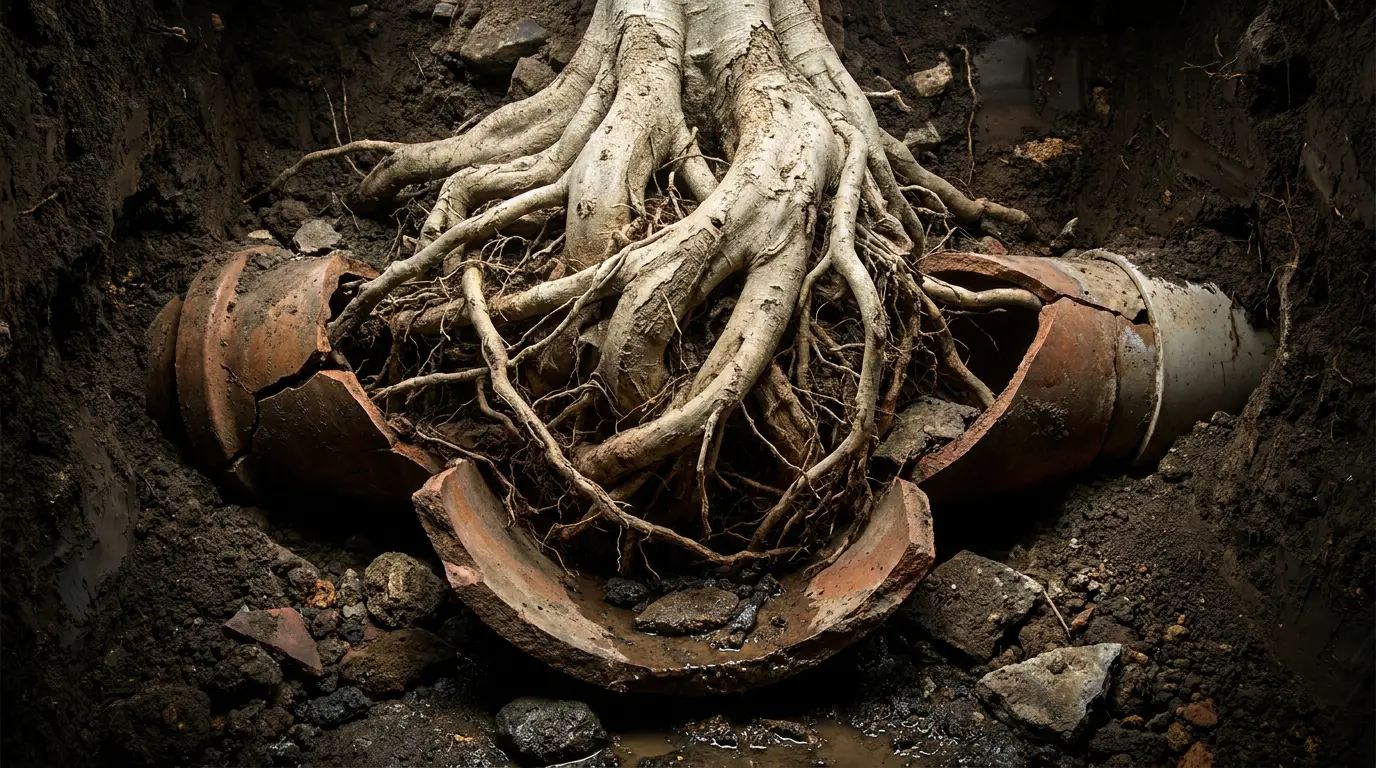
Slab leaks, pinhole leaks, and cracked lines repaired fast — we find the break and fix it with minimal disruption.
Whole-Home Repiping
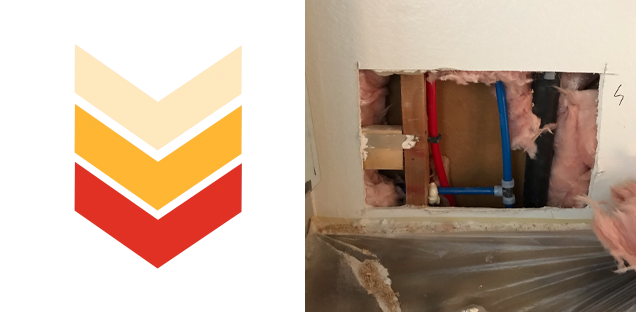
Old galvanized or failing copper? We replace your whole system with durable PEX or copper — permitted and warrantied.
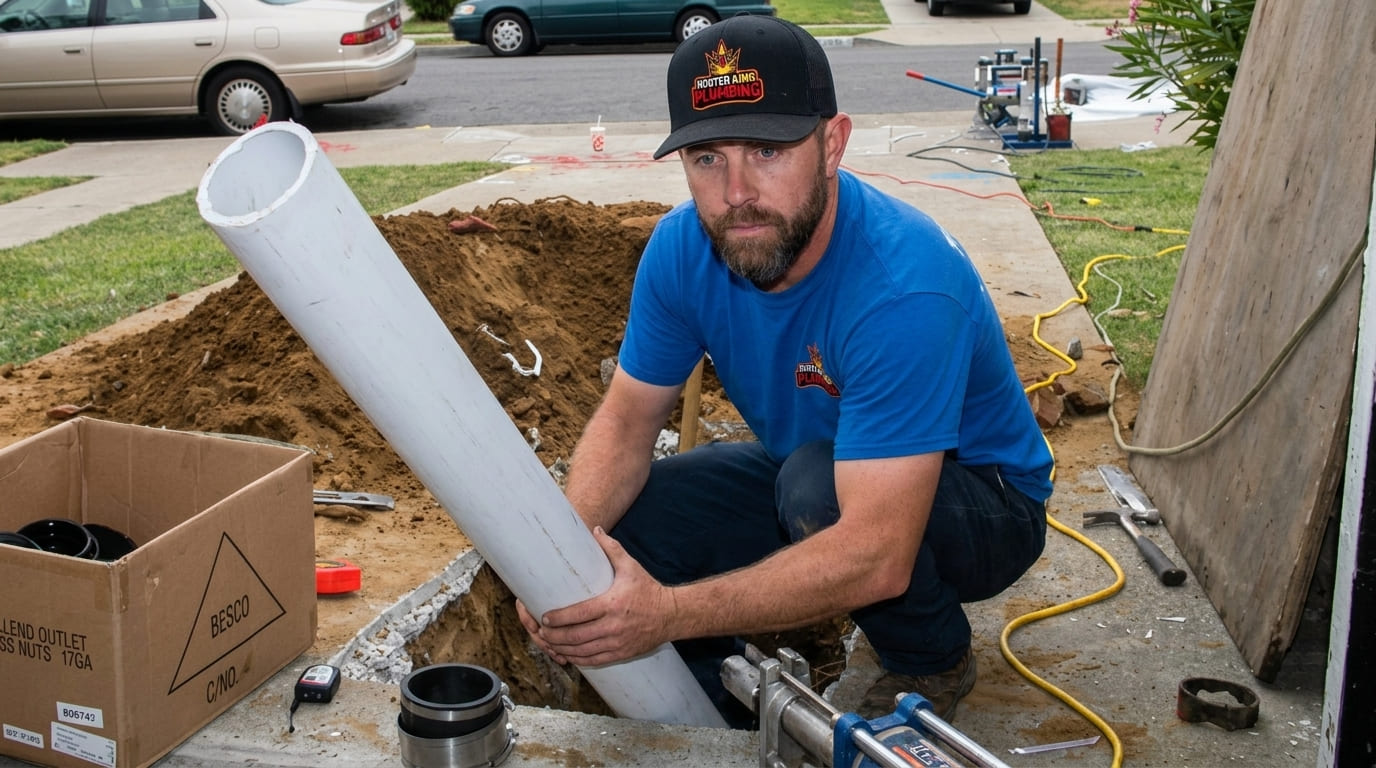
Trenchless Sewer Repair
Replace or reline a broken sewer pipe without tearing up your yard, using pipe bursting and CIPP lining.
Repair or replace?
Should You Repair or Repipe?
A single leak is a repair. A pattern of them usually means it’s time to replace. Here’s how we call it.
| What’s happening | Usual fix |
|---|---|
| One pinhole or slab leak | Targeted spot repair |
| Leaks in several spots | Whole-home repipe |
| Low pressure throughout the house | Repipe corroded lines |
| Rusty or discolored water | Replace galvanized pipe |
| Broken or root-filled sewer line | Trenchless repair |
NEED PLUMBING SERVICES? CONTACT US TODAY!
Testimonial Of The Month
5-Star Service = 5-Star Reviews
The Hidden Costs of Delaying Pipe Repairs
One of the most common and understandable instincts a homeowner has is to ignore a small plumbing issue. A slightly damp spot on the ceiling or a minor drip under the bathroom sink is easy to dismiss when you are busy. However, delaying pipe repairs is almost always a financially devastating mistake. Water is relentless, and it never stops working to degrade the structural integrity of your home.
The most immediate and severe consequence of a delayed pipe repair is the rapid growth of toxic mold. According to the Centers for Disease Control and Prevention (CDC), mold spores are naturally present in the air, but they require a warm, damp environment to multiply. When a pipe has a slow, hidden leak inside a dark wall cavity, it creates the absolute perfect breeding ground. Toxic mold can begin actively growing and spreading across your drywall and wooden studs within just 24 to 48 hours. If you ignore a leak for a month, a $300 pipe repair easily turns into a $5,000 hazardous materials mold remediation project.
Also water absolutely destroys building materials. Hardwood floors will act like a sponge, absorbing the moisture until the planks cup, warp, and snap, requiring a complete, expensive replacement. Drywall will lose all structural integrity and turn to mush. If the leak is under your concrete slab, it will slowly wash away the supporting dirt, creating underground voids that can cause your foundation to crack and sink. The golden rule of plumbing is simple: the longer you wait to fix a bad pipe, the more exponentially expensive the final restoration bill will be. Calling Rooter King at the first sign of trouble is the cheapest insurance policy you can buy for your home.
Schedule Pipe Repair Now!

Modern Piping Materials: PEX vs. Copper
When homeowners in Corona, Jurupa Valley, or Riverside decide to invest in a whole-home repipe, one of the most frequently asked Google searches is, “What is the best material for repiping a house?” Today, the industry standard has narrowed down to two primary contenders: traditional Copper and modern PEX (Cross-linked Polyethylene). Both are excellent materials, but they have distinct differences that fit different homes and budgets.
The Traditional Standard: Copper Piping For over half a century, rigid copper piping was the absolute gold standard in American plumbing. It is incredibly durable, naturally resists bacterial growth, and handles extreme heat exceptionally well. When installed correctly, a copper plumbing system can easily last 50 to 70 years. Also copper is highly valued in the real estate market; buyers love seeing gleaming copper pipes in a utility room.
However, copper has its drawbacks. First, the material itself is very expensive, and because it is rigid, it requires a massive amount of labor to cut, fit, and meticulously solder every single joint with an open torch inside your walls. More importantly for Southern California residents, copper is highly susceptible to the hard water minerals prevalent in the Inland Empire, which can cause microscopic pinhole leaks over time.
The Modern Marvel: PEX Tubing PEX has rapidly become the dominant material for residential repiping, and for excellent reasons. PEX is a highly durable, flexible plastic tubing. Its flexibility is its greatest superpower. Plumbers can smoothly snake long, continuous runs of PEX through walls, around corners, and over ceiling joists without needing to cut the drywall to install elbow joints. Fewer joints in a plumbing system mean drastically fewer places for potential leaks to occur.
For Riverside County, PEX is particularly brilliant because its flexibility allows it to easily expand, contract, and subtly shift with our local seismic micro-tremors without snapping. PEX is completely immune to hard water scale buildup and will never rust or corrode. Finally, because the material is cheaper and the installation is significantly faster than copper, a PEX repipe is generally much more affordable for the average homeowner. Our Rooter King technicians are highly certified in both materials and will gladly help you choose the perfect option for your specific home architecture and budget.
Contact Rooter King
Leaking or Failing Pipes? Call Today
From a single slab leak to a whole-home repipe, we fix it right — licensed, warrantied, and with minimal disruption.
Call (951) 880-3727Request a Time24/7 emergency line · CSLB #1090875 · 5.0★ on Google
Our Service Area
Frequently Asked Questions
Can you repair a pipe without replacing the whole line?
Often yes. For isolated leaks we make spot repairs. For corroded or repeatedly failing lines we recommend replacement so you are not paying for the same leak twice.
What pipe materials do you work with?
Copper, PEX, ABS, PVC, and galvanized. We will tell you which makes sense for your home and budget.
How do you find a hidden pipe leak?
We use leak detection equipment and cameras to locate the leak precisely, so we open only what is needed.
Do you offer whole-home repiping?
Yes. If your home has aging galvanized or repeatedly failing pipes, a whole-home repipe with PEX or copper is often the long-term fix.
Sewer And Water Line Repair In Corona, Riverside And The Surrounding Cities
What we do first is find out what is actually wrong. A camera inspection down the cleanout tells us whether we are looking at roots at a joint, a bellied section holding water, an offset where the ground has moved, scale narrowing a cast iron line, or a genuine collapse. Those five findings lead to five different repairs at five different prices, and no honest quote exists before the camera has been down the line.
What Is Actually Buried Under Inland Empire Properties
Pipe material is largely a function of when the house was built, and the Corona and Riverside housing stock spans a wide range. Homes built before the late 1960s — the older streets around downtown Corona and the established Riverside neighbourhoods — typically have vitrified clay laterals with a mortared joint every few feet, or cast iron inside the building. Clay is chemically durable and mechanically brittle: it does not corrode, but every joint is an invitation to roots and every ground movement is a chance to offset.
Cast iron fails differently. It scales from the inside as hard Inland Empire water and waste move through it, and the rough interior catches everything that follows. A cast iron line at fifty years old often still holds its shape while having lost a third of its bore to buildup, which is why descaling is a real service and not an upsell. Homes built from the 1970s onward generally have ABS or PVC drain lines, which behave far better, but they still belly and offset where the bedding was poor or the ground has moved.
The soil is the other half of the story. Expansive clay soils across much of Riverside County swell in the wet season and shrink in the dry, and that annual cycle is what turns a small settlement into an offset joint over a decade. Norco compounds it with geography — large lots mean unusually long laterals, and a long run gives more opportunity for a belly to form and hold water. In Eastvale and Jurupa Valley, where the housing is newer and the pipe is plastic, the failures we see are more often root intrusion at the connection or damage from later landscaping and hardscape work than material failure.
Choosing The Repair: Spot Fix, Lining, Bursting Or Replacement
There is no single right answer, and any contractor who quotes a full replacement before inspecting the line is guessing with your money. The decision turns on how much of the line is bad, what the pipe is made of, what is on top of it, and whether the line still holds its shape.
Spot Repair
If the camera shows one bad joint or a single crushed section in an otherwise sound line, we open a small excavation and replace that section. It is the cheapest option and the right one more often than the industry admits. See our sewer patch repair page for how the section is cut in and tied back.
Trenchless Lining
Where the host pipe is continuous but cracked, root-intruded or scaled, a cured-in-place liner rebuilds the pipe from the inside without a trench. It is the option that saves driveways, mature landscaping and hardscape. Details on CIPP pipe lining and on spray lining for shorter or irregular runs.
Pipe Bursting
When the existing line is collapsed, badly bellied or too far gone to line, bursting pulls a new HDPE pipe through the old path while fracturing the old pipe outward. Two small pits instead of a trench across the whole yard. See pipe bursting and the wider trenchless replacement overview.
Open Trench Replacement
Still the correct answer when the grade itself is wrong, when the line has to be rerouted, or when access rules the trenchless methods out. It is more disruptive and it is sometimes the only repair that actually fixes the cause rather than the symptom.
Permits, Licensing And Who Signs Off
Sewer lateral and water service replacement is permitted work. Inside the Corona city limits that means a permit through the City of Corona Building Division; in Riverside it runs through the city, and in unincorporated pockets such as Home Gardens, El Cerrito and Temescal Valley it goes through Riverside County. Connection work at the main brings the local agency in as well — Corona Department of Water and Power, Riverside Public Utilities, or Jurupa Community Services District depending on where the property sits. We pull the permit and schedule the inspection as part of the job.
Licensing is the part homeowners can check themselves in about a minute, and should. Rooter King Plumbing holds California State License Board licence CSLB #1090875. The CSLB site lets you confirm that any licence is current, see the classification, and check that the contractor carries workers compensation coverage. Underground line work is exactly the category where an unlicensed crew costs the most, because the mistakes are buried before anyone can see them.
Sewer Line Repair Methods Compared
What the camera finds decides the method. This is the same table our estimators work from when they explain the options on site in Corona and Riverside County.
| Consideration | Spot Repair | CIPP Lining | Pipe Bursting | Full Replacement |
|---|---|---|---|---|
| Best when | One bad joint or section | Pipe is continuous but cracked or scaled | Line is collapsed or badly bellied | Grade is wrong or line must be rerouted |
| Yard disruption | One small excavation | Access pits only | Two pits, entry and exit | Trench along the full run |
| Driveway or hardscape | Usually avoidable | Avoided | Usually avoided | Often has to be cut |
| Works on clay lateral | Yes | Yes, if shape is held | Yes | Yes |
| Works on cast iron | Yes | Yes, after descaling | Yes | Yes |
| Fixes a belly | No | No | Partially | Yes |
| Typical time on site | Under a day | One to two days | One to two days | Two days or more |
Pipe Repair And Replacement At A Glance
- Camera inspection before any quote — no diagnosis, no price
- Trenchless and open-trench methods both in house, so the recommendation is not driven by the equipment we own
- Permits pulled and inspections scheduled for Corona, Riverside and Riverside County work
- CSLB licence 1090875, verifiable free on the state board site
- Clay, cast iron, ABS, PVC, copper and HDPE all serviced
- Corona based, covering Riverside County and the Coachella Valley
- Written scope and price before excavation begins
Pipe And Sewer Repair By City
Frequently Asked Questions
How do I know whether my sewer line needs repair or just a cleaning?
Frequency is the tell. A line that blocks once and then behaves for years was a cleaning problem. A line that backs up two or three times in a year has something structural going on — roots at a joint, a belly holding water, or an offset — and cabling it again only buys months. The camera settles it.
Is the sewer lateral my responsibility or the city’s?
In Corona, Riverside and the surrounding cities the lateral from the building to the connection at the public main is the property owner’s responsibility, including the portion running under the street or parkway in most cases. The utility owns the main. That is why lateral repairs are permitted to the homeowner and quoted to the homeowner.
Do you have to dig up my whole yard?
Usually not. Where the existing pipe still holds its shape we can line it from the inside, and where it does not we can often burst a new line through the old path from two access pits. Full trenching is reserved for lines with a bad grade, a required reroute, or access that rules the trenchless methods out.
What is a belly, and why does it matter so much?
A belly is a low section where the pipe has sagged below grade, so waste and water sit in it instead of flowing through. It causes repeat blockages that cabling never really solves, because the cause is the shape of the pipe rather than anything stuck in it. Lining a belly preserves the belly. Correcting grade means replacing that run.
Why do so many Corona and Riverside homes have root problems?
Clay and cast iron laterals with jointed connections, mature street trees planted directly over them, and long dry summers that push roots toward the only moisture available. Roots find the weeping joint, thicken inside the pipe, and catch everything moving past. Newer plastic lines in Eastvale and Jurupa Valley suffer far less of it.
Will a trenchless repair last as long as a full replacement?
A properly installed cured-in-place liner is a structural pipe within a pipe and is rated for decades of service, and HDPE pulled in by bursting is a new pipe with fused joints and no entry points for roots. The failure mode of both is bad installation, not the method, which is why we camera the finished work before we close the pits.
Do I need a permit, and do you handle it?
Yes, and yes. Lateral and water service replacement is permitted work through the City of Corona Building Division, the City of Riverside, or Riverside County for unincorporated areas, with the water or sewer agency involved at the connection. We pull the permit, coordinate the inspection, and leave you with the signed-off paperwork.
Can you repair the water service line as well as the sewer?
Yes. The pressurised service line from the meter to the house is a separate job with a different failure pattern — pinholing in older copper, usually accelerated by hard local water — and it can also be replaced trenchless in many cases. If your meter keeps turning with every fixture closed, that line is where we start looking.
Send us the symptom and the address and we will tell you what the likely causes are, what the camera inspection involves, and what the realistic repair options are for a property of that age in that city. No excavation is quoted before the line has been inspected.
Rooter King Plumbing, Corona, California. CSLB licence 1090875. Sewer and water line repair across Corona, Riverside, Norco, Eastvale, Jurupa Valley, Lake Elsinore, Hemet and Moreno Valley.