 Skip to content

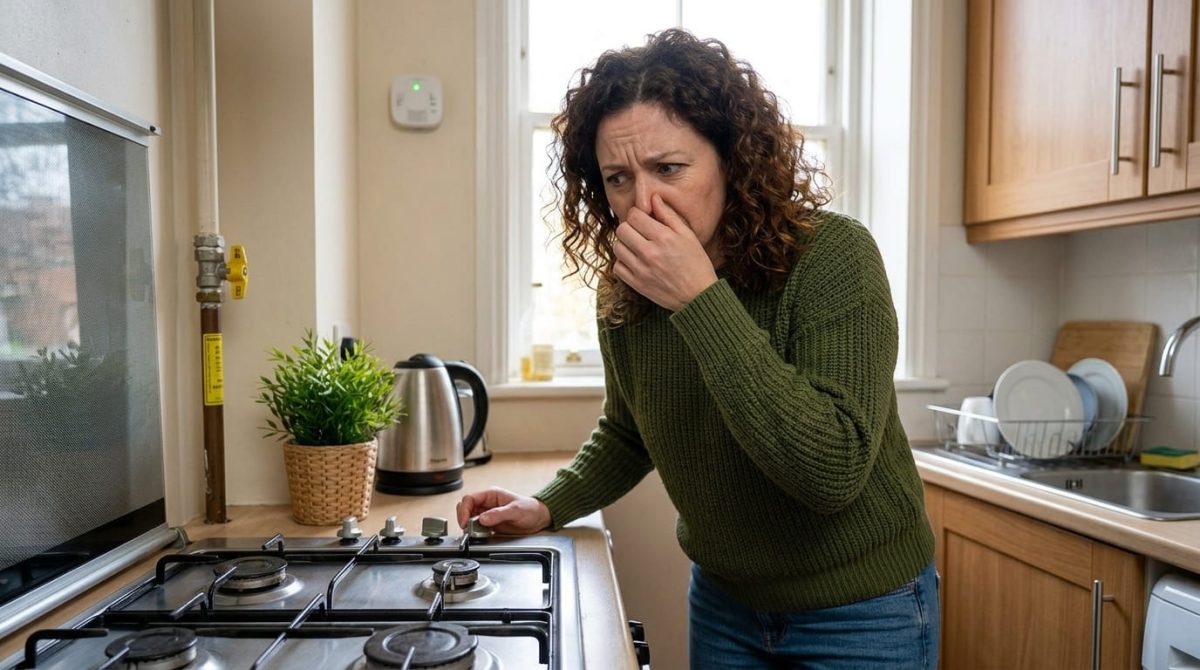
Gas leaks are scary for a reason. They’re invisible. They’re flammable. And the longer they go undetected, the worse they get.
Good news: leaks almost always leave clues. Smell. Sound. Bill changes. Plants in your yard mysteriously dying. Once you know what to look for, catching one early goes from luck to skill.
Here are the seven warning signs every homeowner in Riverside, Corona, Jurupa Valley, and across the Inland Empire should know cold.
1. The “Rotten Eggs” Smell
Natural gas is naturally odorless. Utility companies add a chemical called mercaptan that smells like sulfur or rotten eggs specifically so you can detect a leak with your nose.
If you walk into a room and catch that smell, especially near a gas appliance, take it seriously. Don’t write it off as a quick whiff. Per CDC guidance on natural gas safety, the smell is intentionally pungent because even small leaks need to trigger action.
2. A Hissing or Whistling Sound
Larger gas leaks make noise. Listen for a soft hiss near gas appliances, the gas meter, or along visible gas lines. If you hear it without a fan or appliance running, that’s gas escaping under pressure.
Sometimes the sound comes from outside. Underground gas lines can develop leaks that hiss out of the soil. Same response either way: get clear, then call.
3. Dead or Yellowing Vegetation Along the Gas Line
This one surprises people. Plants need oxygen at the roots. A gas leak underground pushes oxygen out of the soil and replaces it with methane.
If you notice a patch of grass, shrubs, or trees suddenly turning brown and dying in a straight line across your yard, follow the line. There’s a good chance it’s tracing your underground gas service.
4. A Spike in Your Gas Bill
Your gas usage didn’t change. The weather didn’t change. But the bill went up 30%, 50%, sometimes more. Where’s the gas going?
A slow continuous leak doesn’t always smell strong enough to be obvious. The meter still tracks it. If your bill suddenly looks off, that’s a real signal worth chasing.
5. Bubbles in Standing Water
If you see bubbles coming up through a puddle in your yard, near your meter, or out of damp soil, that’s not normal. It often means gas is venting up through groundwater on its way out.
Same with a soapy-water leak test on a gas fitting. If you spray a connection and bubbles form, gas is escaping there.
6. Pilot Lights That Won’t Stay Lit
A weak or wavering pilot flame on your water heater, furnace, or stove can mean the gas pressure isn’t steady. Sometimes it’s a clogged orifice. Sometimes it’s a leak elsewhere in the line bleeding off pressure.
Flame color matters too. A healthy gas flame is blue. If you see yellow, orange, or red, the appliance isn’t burning the gas cleanly, and there’s a problem worth a professional look.
7. Physical Symptoms in Your Family or Pets
Long exposure to a slow gas leak isn’t dramatic. It’s foggy. Headaches that won’t quit. Lightheadedness in certain rooms. Nausea. Trouble breathing. Fatigue that doesn’t make sense.
Pets often notice it first. If your dog or cat suddenly seems off and you can’t explain it, factor a possible leak into the picture.
What to Do the Moment You Suspect a Gas Leak
This part is important. Get this order right.
- Leave the building. Don’t open windows on the way out. Don’t grab valuables. Just get out.
- Don’t touch any electrical switches. No lights, no garage door opener, no fan, nothing. A spark is all it takes.
- Don’t use any phone inside the house. Get outside or to a neighbor’s.
- Don’t start a vehicle in the garage. Same spark risk.
- Call 911 or your gas utility. SoCal Gas’s 24/7 emergency line is 1-800-427-2200.
- Stay clear until you get the all-clear. Even after the smell fades, the line still has to be inspected and repaired.
What Not to Do
- Don’t try to find the leak yourself with a lighter or match. Ever.
- Don’t smoke anywhere on the property.
- Don’t ignore a small smell hoping it’ll go away. Small leaks become big leaks.
- Don’t tighten gas fittings yourself unless you know what you’re doing. Over-tightening can make the leak worse.
How Gas Leaks Get Repaired
Once the area is safe, a licensed plumber finds the leak using a combustible gas detector, soap-water tests on fittings, and pressure testing of the line. The bad section gets cut out and replaced with code-compliant pipe (typically black steel for indoor lines, polyethylene or coated steel for underground).
After repair, the entire line gets pressure-tested again to confirm it holds. Then the gas company comes back, restores service, and relights pilots.
If you want to dig into the federal safety framework, the U.S. Pipeline and Hazardous Materials Safety Administration sets the standards every utility and contractor follows.
Annual Inspections Aren’t Optional
Gas systems age. Joints loosen with thermal cycling. Ground shifts underground. An annual professional inspection catches problems before they become leaks. It’s one of the cheapest insurance policies you can buy as a homeowner.
Trusted Local Network
For property owners outside SoCal handling adjacent home-system trades, HVAC services for residential coordination handle the heating side. And for general handyman work that often comes up during major plumbing fixes, general handyman services cover the surrounding scope.
Your Riverside Gas Line Repair Pros
If you suspect a gas leak, get out first, then call. Once the area’s safe, Rooter King Plumbing serves Riverside, Corona, Jurupa Valley, and Orange County with licensed gas line repair — leak detection, code-compliant pipe replacement, and pressure testing. Contact us for emergency response or annual inspection scheduling.