 Skip to content

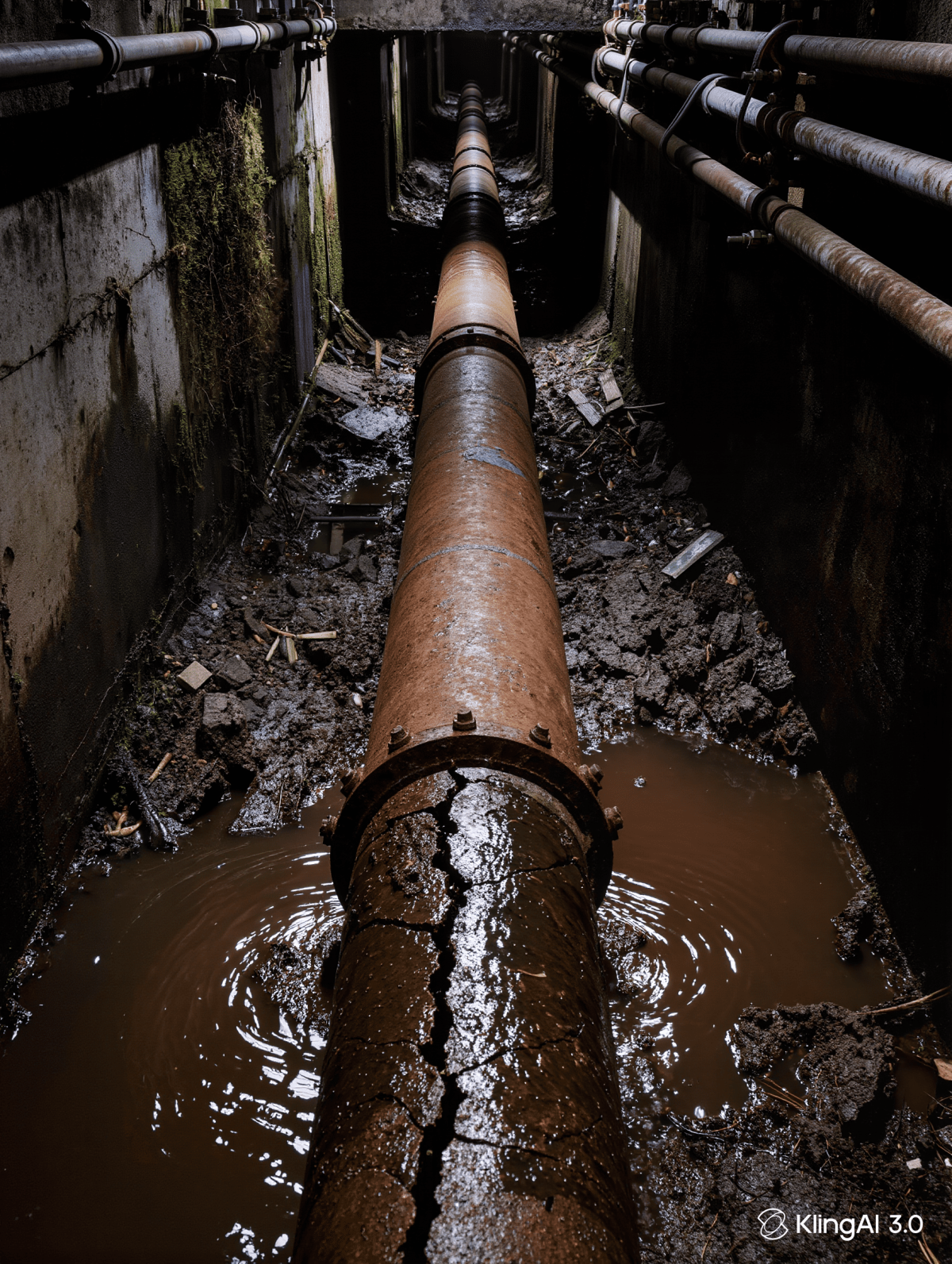
Slab leaks are sneaky. By the time most homeowners notice one, the water has been quietly eating through soil and slab for weeks, sometimes months. Floors warp. Foundations shift. Mold sets in. And the bill goes from “annoying repair” to “wait, we have to do what?”
If you live in Riverside, Corona, Jurupa Valley, or anywhere across the Inland Empire, your home is probably built on a concrete slab. That means your water supply lines run under your house. When one starts to leak, gravity isn’t on your side. The water has nowhere to go but into the slab and the soil beneath it.
The good news? Slab leaks always leave clues. Most of them are small and easy to miss. Here are the seven warning signs to keep an eye on, ranked from “barely noticeable” to “pay attention right now.”
1. Your Water Bill Spiked With No Explanation
Your water usage didn’t change. Nobody filled a pool. The kids didn’t move back in. But the bill went up by 20, 40, sometimes 100 percent.
This is the cleanest early sign of a hidden leak. The EPA WaterSense program reports that the average household leak wastes nearly 10,000 gallons of water a year. A slab leak running 24/7 can blow past that in a couple of weeks.
Quick test: Read your water meter, don’t use any water for two hours, then read it again. If the meter moved, water is going somewhere it shouldn’t.
2. You Can Hear Water Running When Nothing Is On
Stand in the middle of the house. Quiet. Toilets flushed and refilled. Washing machine off. No dishwasher running. Now listen.
If you hear water running, that’s a problem. Could be the toilet’s fill valve sticking. Could be a slab leak under your feet. Either way, it’s worth chasing down.
3. Warm Spots on the Floor
This one catches a lot of people. You’re walking across the kitchen barefoot and one tile or one section of laminate just feels noticeably warmer than the rest.
That’s a hot water line leaking under the slab. The hot water heats the concrete from below. It feels like radiant floor heat in one little patch. If you have hot spots in winter when nothing else is heating the floor, you almost certainly have a slab leak on the hot side.
4. Mildew Smell That Won’t Quit
The musty, mildew, “wet basement” smell that hangs around even when the house is clean? That’s water somewhere it shouldn’t be, breeding mold inside walls or under flooring.
Slab leaks under bathrooms, kitchens, and laundry rooms often vent that smell up through baseboards or behind cabinets. If air freshener fixes it for an hour and the smell comes back, the source is structural.
5. Cracks in Tile, Buckling in Wood Floors
Water under a slab does two things to whatever’s on top of it. It softens the subfloor. It pushes the slab itself a tiny bit upward. Both wreck flooring.
Watch for:
- New tile cracks running in straight lines along grout joints
- Wood planks that suddenly cup or buckle
- Sections of floor that feel “spongy” when you walk on them
- Baseboards pulling away from the wall
These don’t always mean a slab leak. They could mean foundation movement, settling, or just bad install. But if any of them show up alongside other signs on this list, get a leak detection.
6. Damp Spots on Carpet or Tile, With No Visible Source
Wet carpet near an exterior wall and no sink or appliance nearby? That’s slab leak behavior.
The water pushes up through the path of least resistance. Sometimes that’s a grout line. Sometimes it’s the gap between the slab and an exterior wall. Sometimes it bubbles up in the middle of a room with no rhyme or reason.
If you can’t trace a wet spot to a fixture or appliance leak, assume the source is below.
7. Foundation Cracks (or Doors That Don’t Close Right Anymore)
Last on the list because by the time this shows up, the leak has been going for a long time.
Constant moisture under a slab does ugly things. Soils swell. Slabs shift. Cracks open up in walls. Doors that used to close fine start sticking or won’t latch. Window frames go out of square. If you spot fresh hairline cracks along your foundation, especially with any of the other signs on this list, time to act.
What to Do When You Suspect a Slab Leak
In order:
- Read your water meter. Confirm there’s actually a leak somewhere.
- Shut off the water at the main. If the meter keeps spinning even with the main shut off, the leak is on the city side. If it stops, it’s inside your home’s plumbing.
- Check insurance coverage. Most policies cover resulting damage (flooring, drywall, contents) but not the actual pipe repair. Allstate has a clear breakdown of what’s typically covered and what’s not. Read your policy before you start any work.
- Call a plumber with electronic leak detection equipment. Locating a slab leak without specialized gear means jackhammering until you find it. With the right equipment, the leak gets pinpointed within inches before any concrete gets touched.
What Not to Do
A few things people try that just make the problem worse:
- Don’t ignore it. Slab leaks don’t heal themselves. They get bigger.
- Don’t pour leak-stopping chemicals down the line. They don’t work on slab leaks and they damage other plumbing.
- Don’t break up your floor on a hunch. Without electronic detection, you’ll spend a lot of money chasing the wrong spot.
- Don’t file an insurance claim before getting a diagnosis. You need to know what’s covered and what isn’t before the adjuster shows up.
How Slab Leaks Get Repaired
Three main options once a leak is found:
Spot repair. Break up a small section of slab directly above the leak. Cut out and replace the bad section of pipe. Patch the slab. Best when there’s a single, isolated leak in an otherwise good system.
Pipe rerouting. Abandon the leaking section under the slab and run a new line through the attic or walls. Faster and cheaper than tearing into the slab. Good option when the bad pipe is in an awkward spot.
Repipe. If the home’s plumbing is old enough that more leaks are coming, replacing the whole supply system is often the smarter long-term move. Slab access usually isn’t required because the new pipes get rerouted overhead.
A good plumber walks you through all three options before swinging a hammer.
How to Prevent Slab Leaks
You can’t bulletproof a slab. But you can stack the odds:
- Keep your water pressure under 80 psi (anything higher stresses pipe joints)
- Soften hard water if your home runs on Inland Empire municipal supply
- Don’t ignore small drips from any visible plumbing — they’re a hint about what’s happening below the slab too
- Have an experienced plumber walk the system every 5 to 7 years
Trusted Local Network
For property owners outside SoCal needing tree-care coordination with plumbing root issues, tree assessment and removal services handle the above-ground side. And for general handyman work alongside major plumbing projects, general home-services contractors cover related repair work.
Your Riverside Slab Leak Detection Specialists
If you’re seeing any of the warning signs above, don’t guess. Rooter King Plumbing serves Riverside, Corona, Jurupa Valley, and Orange County with electronic leak detection that pinpoints slab leaks within inches before any concrete gets touched. Contact us today and we’ll get a tech out to scope the problem before it gets bigger.
Think you have a slab leak?
Don’t wait for the water bill. Rooter King pinpoints hidden slab leaks with flat $99 electronic detection — no jackhammering to find it.
Call (951) 880-3727